
By Tessa R. Salazar
November 4, 10:30 p.m. The road near the hotel I booked for my extended stay in Japan was dimly lit. It was my fourth “extra” day in Tokyo following my coverage of the 2025 Japan Mobility Show that officially ended on October 31. I was part of the media group hosted by Toyota Motor Philippines, and I represented the newspaper I worked and wrote for for the past 30-something years. I chose to stay on for a few more days, chasing a lead for an enterprise story in Adachi.
I was walking the 3-km stretch back to my hotel on this night, breathing in the nippy air, thinking of my mother’s birthday, which was October 28. She would have turned 87 that day, but heaven had other plans, as she passed on 14 days before Christmas Day in 2024.
Along the way, I saw an old man on his bicycle stopped by the side of the road. He was clutching his chest, his face grimacing in pain. Then, he toppled onto the pavement, struggling to get back up with his bike. I rushed towards him, telling him to sit up first. He was visibly weak, and seemed to be on the brink of losing consciousness. He still tried to stand up, but fell down again, this time his head hitting the concrete with a sickening thud. I couldn’t react fast enough to catch his fall. I was the only other person on the street.
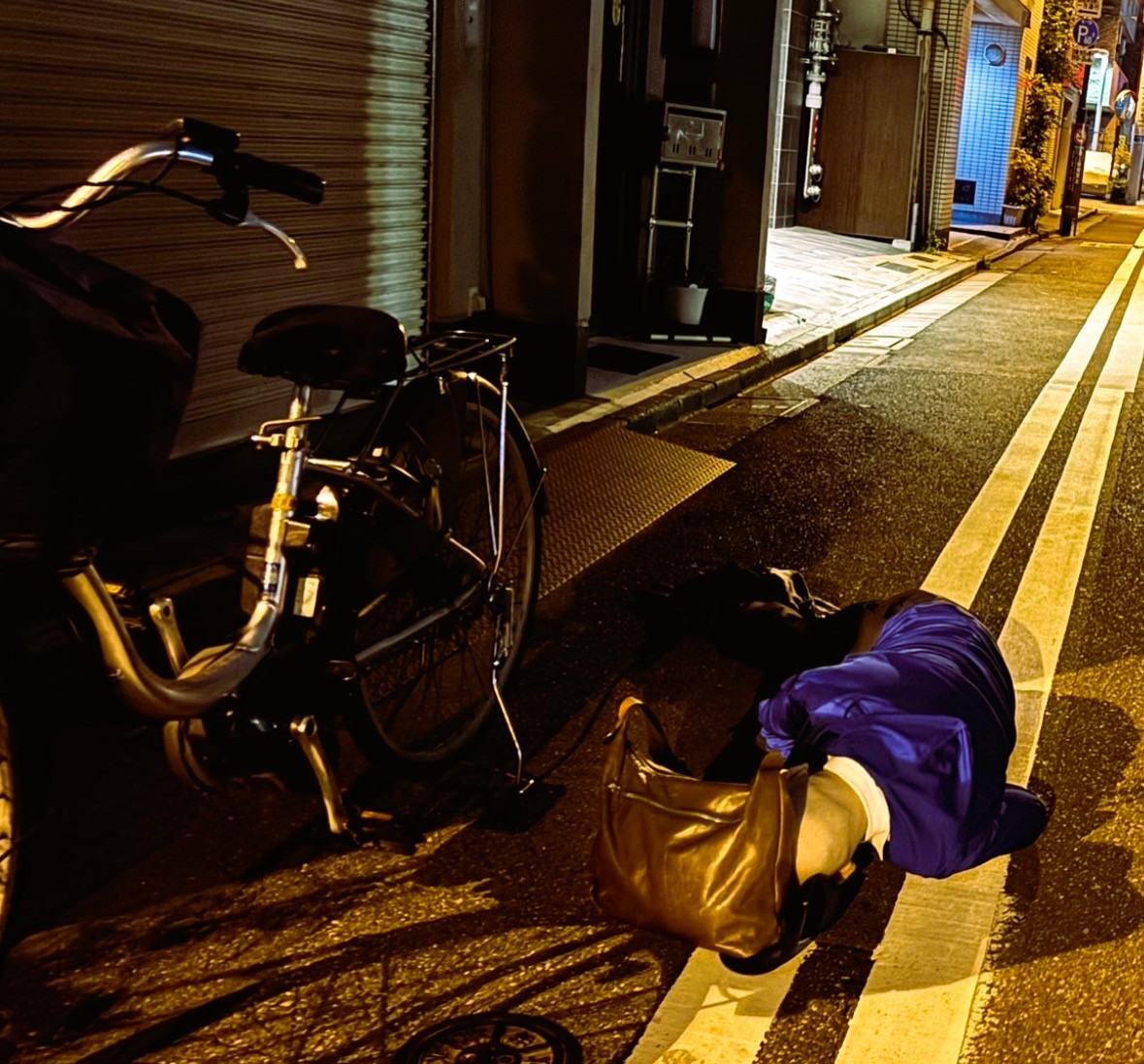
I wasn’t sure if he was having a heart attack, but I knew he wasn’t drunk. He didn’t smell of liquor. I asked in English, but he responded in Japanese. The language barrier was harder than the street we shared at that moment.
Leaving him there was the last thing on my mind. From experience, the people here cared for one another, be they strangers or foreigners. I remember the many times a random Japanese helped me find my way when I got lost in the confusing streets and railway systems of Tokyo, Nagoya, or in any part of the country. They didn’t leave me until they were certain I knew where to go, language barriers be damned. So, in a way, this was my way of “paying it forward.” But even if this happened anywhere else, it was the right thing to do for this person in obvious distress.
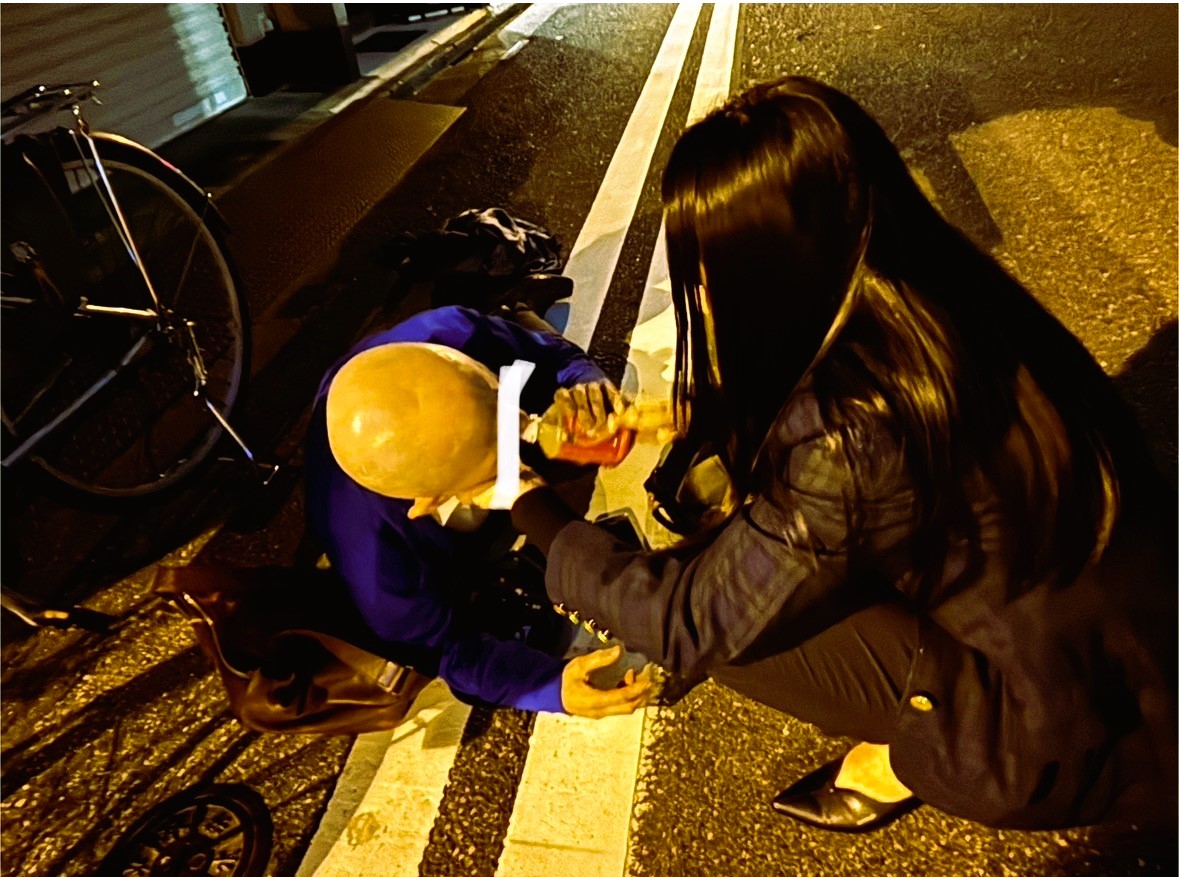
A Japanese woman passed by and stopped when I asked her for help. Another woman came and offered him her water. One of them gave him a banana. I then remembered I was carrying some oranges, but totally forgot to offer him one. I couldn’t recall if offering oranges helped someone who was having a heart attack.
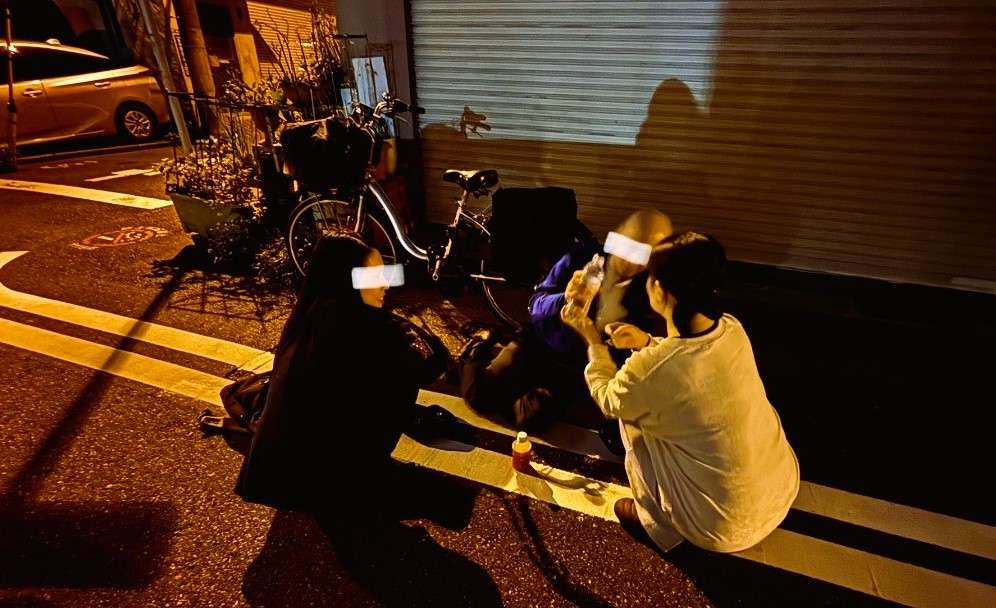
The two women spoke to the old man, asking him questions that I obviously didn’t understand. I asked them if they could call emergency medical services to dispatch an ambulance. One of the women told me that the old man asked not to be brought to the hospital. He said that he just needed to catch his breath, and that he’d be on his way home. I told them that he hit his head on the pavement falling down, that a doctor might be necessary to check him up.
Another passerby approached. A man. He offered to call the paramedics. By then, a small crowd was already gathered around the old man. I still didn’t leave the scene. I wanted to see for myself emergency medical services arriving and attending to him. I took photos just in case the paramedics needed to see the condition of the old man before they arrived.
The old man remained adamant about not going to the hospital. But he was too weak and dazed to leave. He reminded me of my stubborn father, who refused to go to the hospital even when he was suffering a heart attack in 2005, and when he experienced breathing difficulties twice in 2022 when he was 84 years old. Those visits to the hospital saved his life, and he’s still up and about (albeit in a wheelchair) today, at 87, with a pacemaker keeping his heart beat in rhythm.
An ambulance arrived a few minutes after the call. He was placed on a stretcher, paramedics reading his vital signs. At that point, I knew the old man was in capable hands, and I went on my way back to the hotel.
I didn’t get his name, nor the names of the first three people who joined us. We all just came to his side, provided support in any way we could, and kept him company until the medical professionals arrived.
‘No one left behind’
Japanese culture values community concepts like collectivism, social harmony (“wa”), empathy (“omoiyari”), and shared responsibility. I felt all of that converging on the old man that night, with the way the strangers cared for him and didn’t leave his side.
Somehow, Toyota adopted these concepts into its corporate culture and working philosophy, merging them into a “no one left behind” mantra. I noticed this in the global giant’s participation during the 2023 Japan Mobility Show, at the 2024 Olympics/Paralympics in Paris (where this was most notably felt in the extra care and consideration for the mobility needs of persons with disabilities attending the events), and now most recently at the 2025 JMS. (See TessDrive’s reel about Toyota’s “Mobility for All” here: https://web.facebook.com/reel/811743308234791.
“No one left behind” has been Toyota’s overarching philosophy for ensuring “Mobility for All,” emphasizing its commitment to providing diverse transportation solutions and social contributions that don’t exclude any group or region.
About the Japanese, from a Pinoy POV
Japan is one of the countries where I feel safe traveling on my own, even at night.
It seems the Japanese are just built different. I remember, during a trip to Tsukuba University, a Filipino friend of mine who worked at the university, molecular biologist Custer Deocaris, shared his experience while he was out cycling. He said a cyclist couple, both in their 90s, caught up with him, tailed him for a while, and then “respectfully” asked him to let them pass, the tone of their voices hinting that they were getting bored with following him because he was too slow.
I guess these two old cyclists left their “no one left behind” mantra at home.