

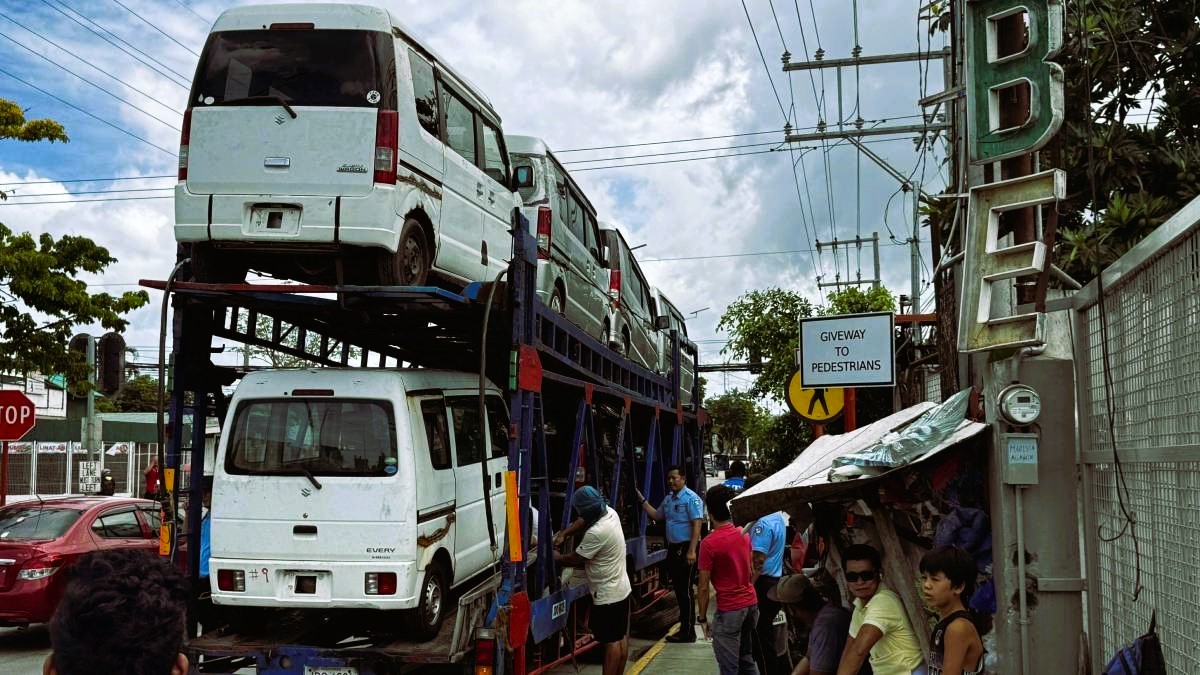
The Auto Body Manufacturers Association of the Philippines (Abmap) has thrown its support behind the Land Transportation Office (LTO) as the agency tightens restrictions on the registration of illegally imported mini vehicles and kei cars—many of which have become increasingly visible on Philippine roads in recent years.
The LTO has restricted or denied registration of several Japan Domestic Market (JDM) mini vehicles, including gray-market imports of the Suzuki Jimny (imported variants), Hustler, Spacia, Palette, Wagon R, and Stingray. These actions apply specifically to vehicles not officially distributed by Suzuki Philippines and those that entered the country outside authorized importation channels.
At the heart of the issue is Republic Act No. 8506, which prohibits the operation of right-hand drive (RHD) vehicles on Philippine roads. While some of these vehicles undergo conversion to left-hand drive (LHD), the LTO has repeatedly flagged many of these conversions as unsafe, inconsistent, or non-compliant with vehicle safety standards.
“Moving the steering wheel is not enough,” said Abmap executive director Edgar Manuel. “Steering conversion affects the entire vehicle—braking balance, steering geometry, structural integrity, and crash safety. If these are done without manufacturer standards, you are putting drivers, passengers, and other road users at risk.”
Abmap also pointed out that most kei cars are engineered specifically for Japan’s urban environment, where speed limits are lower and vehicle dimensions are tightly regulated. In contrast, Philippine road conditions involve mixed traffic, heavier vehicles, longer travel distances, and less forgiving road infrastructure—making safety compliance even more critical.
From a numbers standpoint, industry groups estimate that thousands of gray-market mini vehicles have entered the country over the past decade, many sourced from Japanese used-vehicle auctions. These units often avoid full duties, taxes, and compliance costs—estimated by industry players to reach hundreds of thousands of pesos per vehicle. When aggregated, lost government revenues from these imports are believed to run into the billions.
Another red flag cited by Abmap involves rebuilt and misdeclared units, particularly those entering through ports and free zones. Some vehicles are imported as “used parts,” later reassembled and registered under questionable processes. The LTO has intensified enforcement against these rebuilt and “chop-chop” units due to safety and legal concerns.
“For legitimate body builders and vehicle manufacturers, this is a serious issue,” Manuel added. “Companies that comply with crash standards, homologation, and emissions testing invest heavily to meet the rules. Illegal imports undermine that effort and create unfair competition.”
Abmap stressed that the LTO’s actions do not restrict consumer choice outright. Vehicles that are officially imported, properly certified, and sold through authorized distributors remain fully eligible for registration. Instead, the crackdown targets vehicles that fail to meet safety, legal, and documentation requirements.
For motorists, Abmap said the message is clear: Buying cheaper gray-market vehicles may come with long-term risks—including registration denial, insurance issues, and safety concerns.
“Motoring freedom should never come at the expense of safety,” Manuel said. “The LTO is right to enforce the law. Safe roads start with safe, legally compliant vehicles.”
To know more about Abmap, follow its official Facebook page https://web.facebook.com/abmap2021/?_rdc=1&_rdr#.