
How we prepare future generations is shaped not just by the technology we master, but by the history we choose to preserve. In this roundup, we look at two transformative developments in the region.
Learning in the AI age: Vingroup launches Verta school
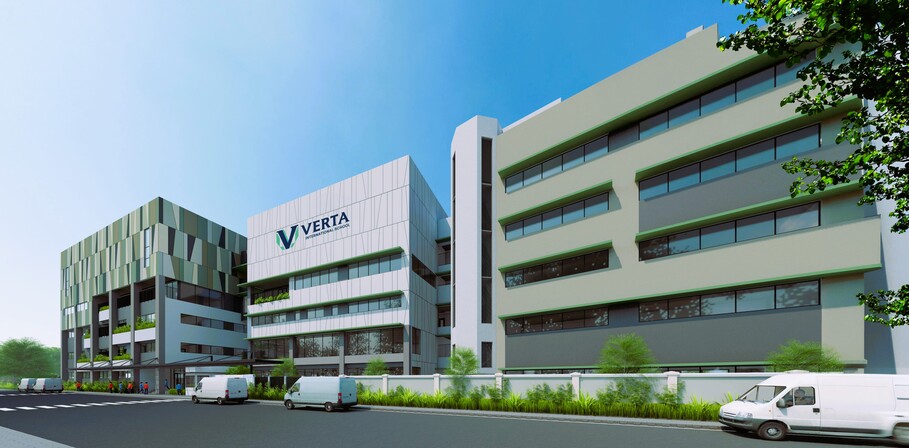
Recognizing that artificial intelligence is fundamentally transforming how students study, work, and innovate, multi-sector conglomerate Vingroup has officially announced the establishment of Verta International School.
Positioned as an AI-era K-12 institution built around a US-oriented curriculum, Verta aims to cultivate independent critical thinkers capable of leveraging generative and advanced computing technologies to solve real-world problems.
Located at 148 Giang Vo, Ba Dinh District, Hanoi, Verta is slated to open its doors in August 2027 with a planned maximum capacity of 800 to 1,000 students. Admissions for its inaugural academic year began this October, welcoming an initial cohort of approximately 400 students across Grades 1 through 11.
The new institution expands Vingroup’s comprehensive education network, operating alongside established arms such as Vinschool, Brighton College Vietnam, VinUniversity, and the Vin Nexus Center.
Verta will be spearheaded by Dr. Tarek Razik, an international educator with over 35 years of administrative leadership who previously served as head of school at both the Jakarta Intercultural School and the International School of Beijing.
Learn. Make. Matter.
Verta’s instructional approach integrates core foundational knowledge with hands-on technical fabrication and societal value creation:
o Learn (Foundational rigor and interdisciplinary depth): Delivered entirely in English, the early grades establish strong proficiencies in mathematics, scientific inquiry, language, humanities, and the arts. In the upper grades, the curriculum expands into AI and advanced computing, robotics and engineering, biomedical science, entrepreneurship, and advanced placement (AP) courses.
o Make (From concept to tangible prototyping): Students are guided beyond abstract theory into practical engineering cycles—moving systematically from questioning to architectural design, building, testing, feedback collection, and functional refinement.
o Matter (Connecting with the real-world ecosystem): Rather than confining projects to classroom exercises, students apply their work to genuine community and industrial challenges. Learning modules will tap into Vingroup’s broader industrial ecosystem—which spans green mobility (VinFast), smart infrastructure (Vinhomes), healthcare (Vinmec), and high-tech research centers—providing learners direct access to authentic data sets, field mentors, and practical testing environments.
Phan Ha Thuy, chairwoman of VS Company (the Vingroup entity developing the Verta Education System), stated:
“Verta aims to equip students with the strong academic foundations needed to pursue demanding university pathways, while developing their ability to conduct research, reason, design, and turn ideas into tangible outcomes; use AI and technology to extend their thinking; and tackle problems without predefined solutions. More importantly, by the time students leave Verta, they should be able to learn new things independently, form their own judgments, and take responsibility for their decisions.”
Prospective families can access curriculum guides and enrollment details at admissions.verta.edu.vn or via the admissions hotline at 1800 9499.
The Balangiga Bells are home—now what?
In a privilege speech delivered before the House of Representatives on Sept. 30, Eastern Samar Lone District Representative Christopher Sheen P. Gonzales called on national government agencies to transform the historic town of Balangiga into an enduring center for historical education, research, and diplomatic reconciliation.
Addressing his colleagues two days after the commemoration of the 125th anniversary of the Balangiga Encounter (Sept. 28, 1901), Gonzales challenged the country to move beyond passive remembrance:
“Halos walong taon na po ang lumipas mula nang makauwi ang mga kampana sa Pilipinas. Kaya marahil, panahon na upang magtanong: The bells have returned—now what? Nakauwi na ang mga kampana. Ano na ngayon? Naiuwi nga po natin ang tatlong kampana. Ngunit sapat na po ba na naroon lamang sila upang tingnan at kuhanan ng litrato ng mga bumibisita? Sapat na po ba na tuwing ika-28 ng Setyembre ay gugunitain natin ang Balangiga Encounter, at pagkatapos ay hihintayin na lamang natin ang susunod na taon? (Nearly 8 years have passed since the bells returned home to the Philippines. So perhaps, it is time to ask: The bells have returned—now what? The bells are home. What now? We have indeed brought back the three bells. But is it enough that they are simply there for visitors to look at and take photos with? Is it enough that every 28th of September we commemorate the Balangiga Encounter, and then just wait for the following year?)”
The 1st PH-US war memorial and museum
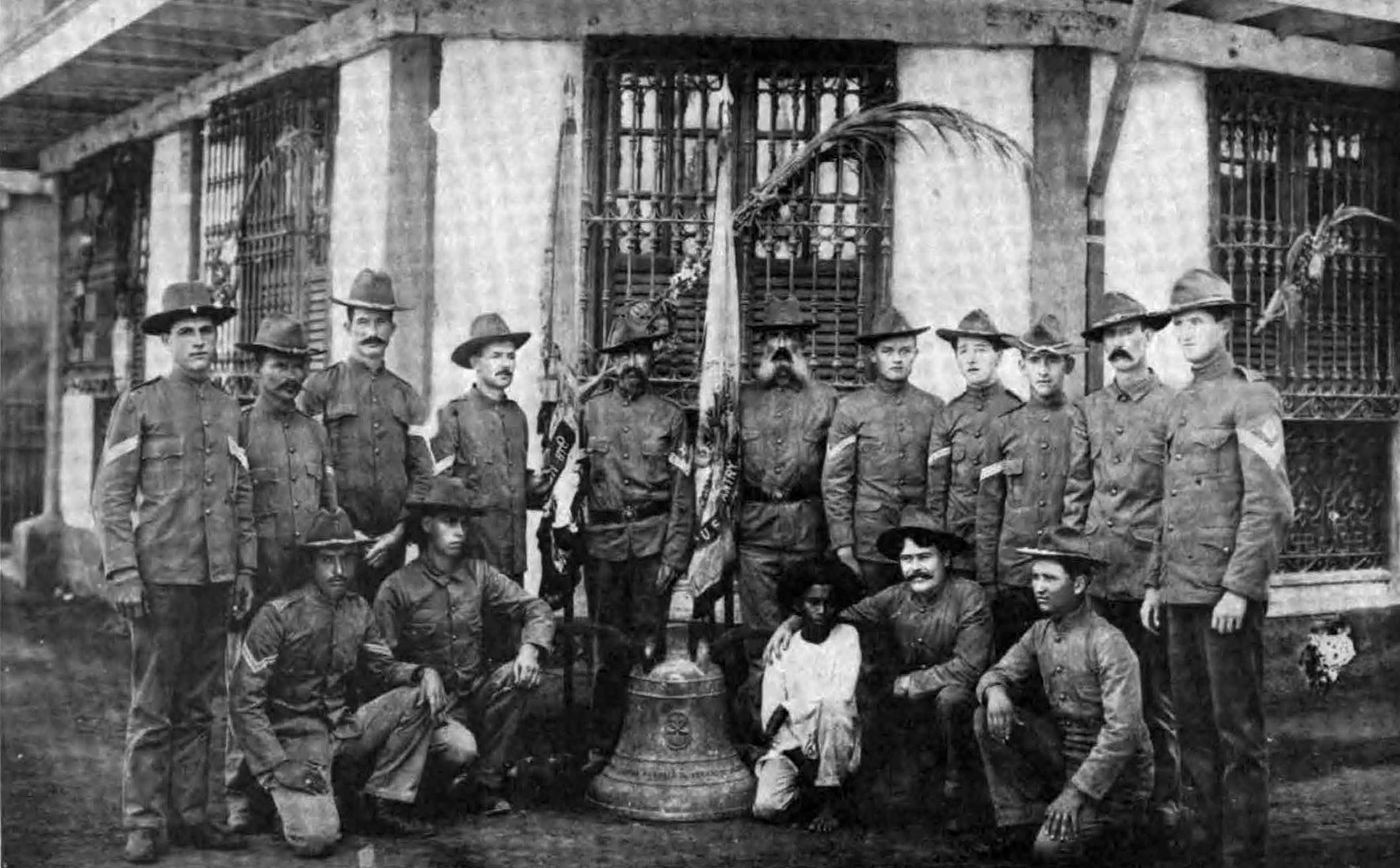

The Balangiga Encounter remains one of the most consequential events of the Philippine-American War. Following the clash, the three church bells of the San Lorenzo de Martir Parish were seized as war trophies by the United States Army and kept abroad for 117 years before their historic repatriation on Dec. 11, 2018.
Gonzales observed that while the bells drew massive international fanfare upon their homecoming, public attention has since tapered off, leaving the bells treated primarily as a backdrop for tourist selfies or isolated religious pilgrimages.
Following extensive consultations with renowned historian Dr. Rolando Borrinaga, Gonzales formally proposed the establishment of the first Philippine-American War Memorial and Museum in Balangiga. The concept originally garnered interest as early as 2014 from retired US Navy officers Rear Admiral Dan McKinnon and Captain Dennis Wright, two key American veterans who campaigned for the bells’ return.
The project envisions:
o Preserving national heritage: Fully restoring and integrating the life-sized Balangiga Encounter bronze diorama designed by National Artist for Sculpture Napoleon Abueva, which was originally commissioned under then-district representative and current House Minority Leader Marcelino “Nonoy” Libanan;
o Institutional support: Mobilizing the National Historical Commission of the Philippines (NHCP), Department of Education (DepEd), Department of Tourism (DOT), and Department of Foreign Affairs (DFA) to co-develop the site as an educational destination;
o Diplomatic milestone: Marking the 80th anniversary of formal US-Philippine diplomatic ties (1946–2026) by framing Balangiga not as a symbol of permanent animosity, but as an emblem of how wartime conflict evolved into enduring bilateral partnership and peace.
Samar’s link to world history
Gonzales emphasized that the narrative of Samar extends far beyond regional geography, having served as a pivot point in world history across four centuries.
In 1521 (first global encounters): Ferdinand Magellan’s expedition made its first Philippine landfall on the islands of Suluan and Homonhon (both in present-day Guiuan, Eastern Samar).
From 1565 to 1815 (galleon trade network): The port of Palapag in Northern Samar served for 250 years as a vital Pacific waypoint along the Manila-Acapulco galleon trade route connecting Asia with the Americas.
In 1901 (anti-colonial resistance): Balangiga mounted one of the fiercest resistance actions against foreign occupation during the Philippine-American War.
In 1944 (Allied Pacific liberation): Just over four decades after opposing American forces in Balangiga, Samareños fought alongside the US military, as the 61st and 93rd US Naval Construction Battalions transformed Guiuan into a major Allied staging airbase to liberate the archipelago.
Citing President Manuel Roxas’ 1946 Executive Order No. 27—which created the Surplus Property Commission to dispose of wartime infrastructure—Gonzales cautioned that when nations neglect the deliberate physical preservation of heritage sites, the lessons and memories they hold inevitably erode from public consciousness.
Honoring sacrifice with human dignity
Concluding his speech, Gonzales stressed that true historical education must ultimately uplift the descendants of those who sacrificed for the country:
“Hindi lahat ng mga ordinaryong Samareño na nagbuwis ng kanilang buhay para sa bayan ay nabigyan ng medalya. Hindi lahat ng kanilang pangalan ay naisulat sa ating mga aklat ng kasaysayan (Not all ordinary Samareños who laid down their lives for the nation were awarded medals. Not all of their names were written in our history books). But the absence of a medal does not diminish the value of their sacrifice.
“Ang tunay na pagpupugay sa kanilang sakripisyo ay ang patuloy na pagsisikap na ang mga Samareño ngayon ay magkaroon ng sapat na access sa serbisyong pangkalusugan, de-kalidad na edukasyon, sapat na pagkain, disenteng pabahay, kabuhayan, at iba pang pangunahing pangangailangan upang mamuhay nang marangal. (The true tribute to their sacrifice is the relentless effort to ensure that today’s Samareños have adequate access to healthcare services, quality education, sufficient food, decent housing, sustainable livelihoods, and other basic necessities to live with dignity). History must not only remind us of what our people died for. It must also remind us of what our people deserve to live for.”