

Story and photos by Ian Reyes
For the local automotive enthusiast, the Manila International Auto Show (MIAS) is more than just a trade exhibit; it is a secular pilgrimage. My own history with the show is a long-running narrative that began in 2006. I’ve made it a point never to miss a year since, still feeling a twinge of “gearhead guilt” for skipping the inaugural 2005 staging due to a demanding desk job. While I frequent the country’s other major biennial motor show—along with a twice-monthly outdoor test drive event and a custom car and truck show that has been running since the 1980s—MIAS remains the fixed point in my annual calendar. It is a tradition as reliable as the Manila heat.
The 2026 iteration, which wrapped up its April 9 to 12 run, served as a massive barometer for the Philippine automotive landscape. Under the banner “Powering Mobility,” the show flexed its muscles by re-incorporating the Philippine Trade Training Center (PTTC) alongside its traditional home at the World Trade Center. This expansion didn’t just add square footage; it transformed this year’s MIAS into one of the most comprehensive and largest spectacles to date.
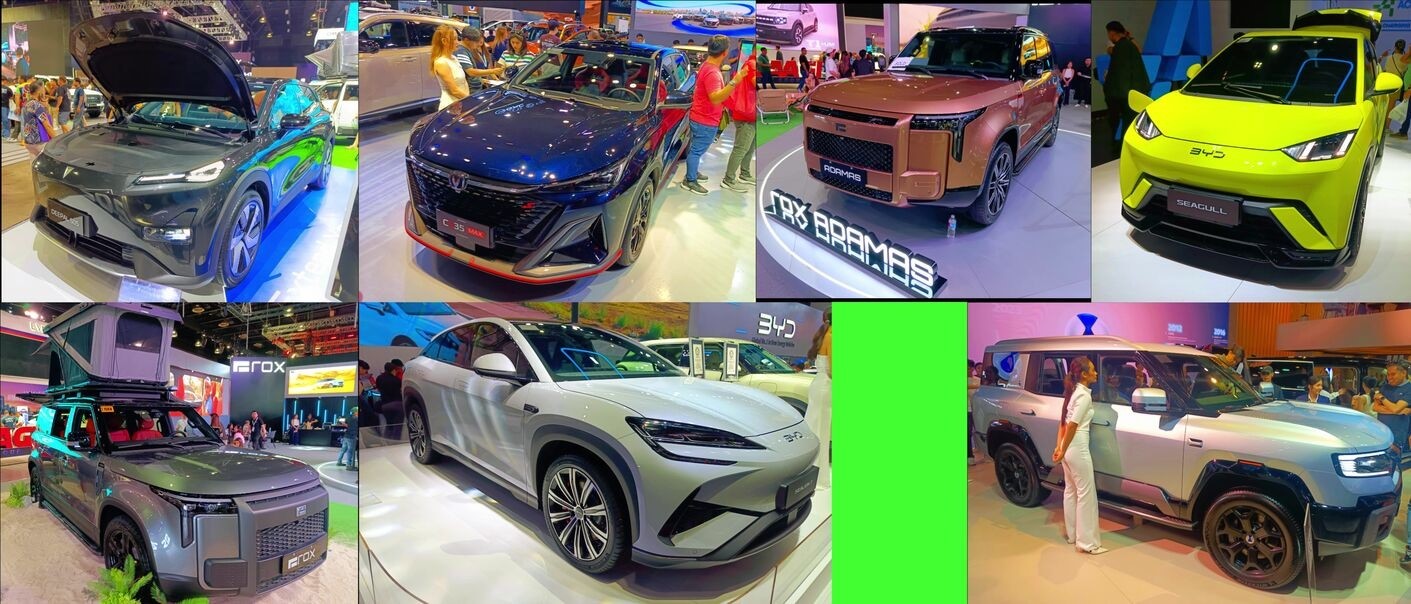
What became undeniably clear this year is that what we once dismissed as “niche curiosities” have officially usurped the main stage. In the current climate, new energy vehicles (NEVs) aren’t just a trend—they are the undisputed “flavor of the month.” This tectonic shift, which began gaining momentum last March, is fueled by a harsh reality: Pump prices that have ballooned to levels that make even the most stoic commuter wince. With the declaration of a national energy emergency still fresh in our minds, the timeliness of MIAS 2026 couldn’t have been more surgical.
The show floor was a diverse battlefield. We saw an aggressive array of battery electric vehicles (BEVs), hybrids (HEVs), and plug-in hybrids (PHEVs) fighting for dominance, while a shrinking—but stubborn—handful of internal combustion engines (ICEs) stood their ground for the petrolhead purists still lurking in the main hall.
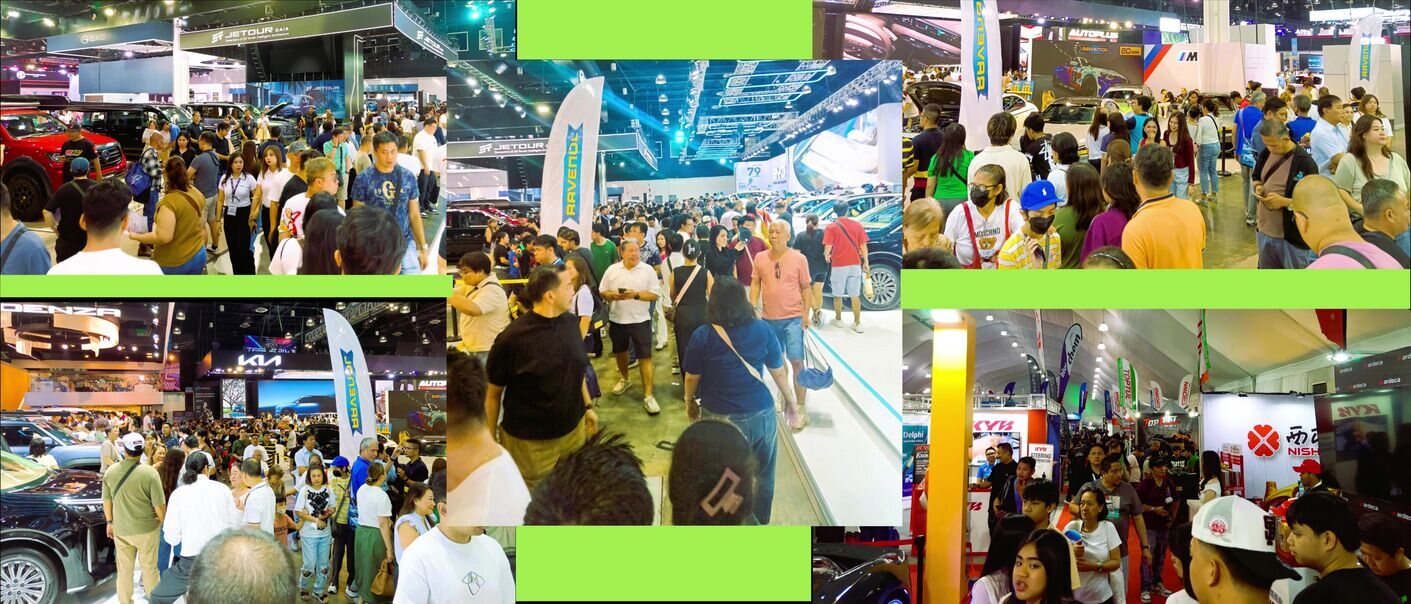
Of course, no show is without its friction. While the organizers clearly aimed to offer something for everyone, visitors and media faced the usual logistical gauntlet—challenges that have been well-documented elsewhere, from the humid parking treks, the photo bombers ruining the photos to the inevitable opening-day bottlenecks. Yet, even as we acknowledge that no venue is perfect, I’m inclined to give the benefit of the doubt; the evolution of the event mirrors the industry it serves, and there is a clear trajectory for improvement in the years ahead… I hope!
So, navigating through the hype and the heat, the good and the grit, here are the 10 past and present cars (in random order) that caught my attention in this new era of mobility.
The ‘pormadong’ Tamaraw: Atoy’s lifestyle masterpiece
The “Next Generation” Toyota Tamaraw is no longer just a humble workhorse. In the hands of Atoy Llave of Atoy Customs, the IMV 0 platform has been reimagined as the “Pormadong Tamaraw”—a lifestyle-oriented rig that proves utility can be stylish.

Collaborating with Toyota Motor Philippines (TMP), Llave leaned heavily into an “Adventure” aesthetic. A significant lift kit provides a commanding stance, complemented by Method Race Wheels wrapped in rugged all-terrain rubber. Custom fender flares, a front bumper guard, and a specialized roll bar transform the silhouette from basic to beastly.
Recognizing the Filipino preference for double-cab pickups that seat the whole family, Llave stretched the cabin. The rear quarters are surprisingly roomy, easily accommodating three adults. However, as a prototype, there is room for refinement. To meet modern standards, the next challenge involves integrating 3-point seatbelts and perhaps replacing the fixed glass with functional windows. One might also hope for rear door handles that match the front, moving away from the nostalgic 1989-92 Corolla-style aesthetic.
Currently, the rear cab and bed are attached, but separated from the cockpit by the stock rear wall. For a truly seamless, car-like interior, one hopes TMP might eventually provide Atoy with “cutaway” cab-chassis units—units delivered without the roof and rear panels.
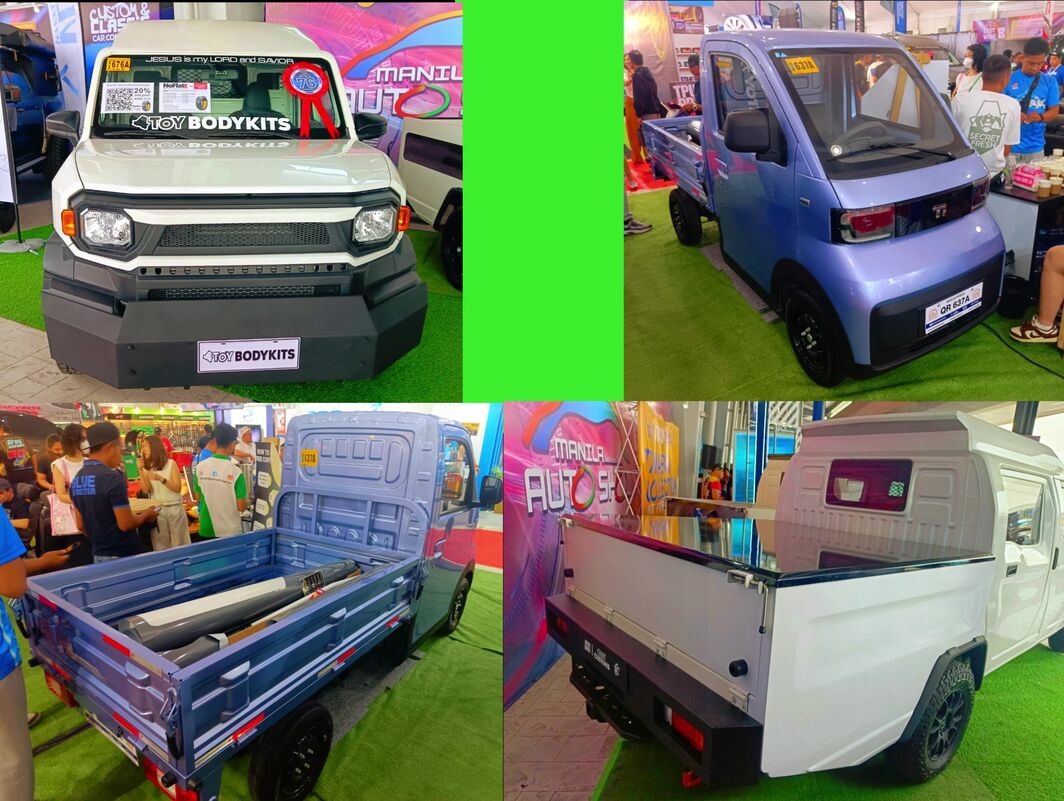
Despite these technical hurdles, Llave has successfully bridged the gap between imagination and reality. This isn’t just a truck; it’s a statement that the Tamaraw’s modularity is limited only by our creativity.
GAC Aion Hyptec HT: Dramatic entrance, touch of caution
Back in 2019, when my cousin in New York first showed off her Tesla Model X, I was mesmerized by its Falcon Wing doors. It felt like science fiction brought to life, leaving me wondering if such audacity would ever grace Philippine asphalt. Fast forward to 2026, and that futuristic silhouette has finally arrived—not from Silicon Valley, but from GAC’s premium electric arm in the form of the Hyptec HT.
The Hyptec HT is a mid-size luxury EV that masterfully blends high-concept drama with real-world presence. Its piece de resistance is undoubtedly the gull-wing rear doors on the Ultra variant. These aren’t just for show; they soar to a height of 213 cm and utilize eight sensors to navigate tight parking spots.
Inside, the “executive lounge” aesthetic takes center stage. The cabin features a 22-speaker Dolby Atmos system and high-definition touchscreens. For the VIPs in the back, the experience is truly “First Class,” with seats reclining up to 143 degrees and integrated leg rests. It is a sophisticated statement of GAC’s intent to dominate the premium EV space.
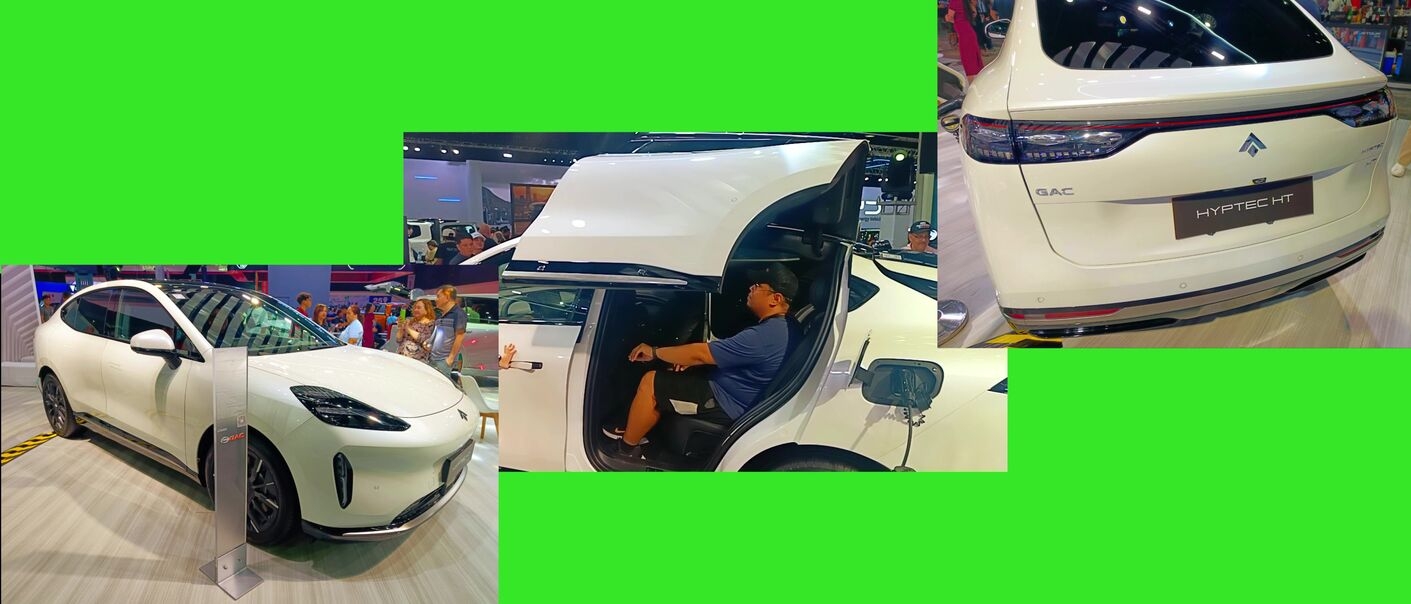
However, complex tech demands flawless execution. During a recent walkthrough, I witnessed a sobering reminder of the challenges facing “smart” doors.
While a man was inspecting the upper frame, a child inadvertently pressed the “close” button. Despite the advertised anti-pinch mechanism, the sensors failed to detect his hand. The door continued its downward arc, pinching his fingers against the car’s body. The resulting pain was evident, requiring immediate staff intervention. It was a clear indication that sensor calibration for these heavy, motorized assemblies still has room for refinement.
Beyond the electronics, ergonomics presents a different hurdle. A pronounced “hump” exists between the rear seat and the outside world, making ingress and egress a bit of a workout. For smaller passengers, stepping out requires a bit of a “yank” to reach the ground gracefully.
Still, if I were a businessman in the events industry, I’d see a goldmine. For weddings and debuts, the Hyptec HT offers the ultimate “grand entrance.” It is a stunning, tech-forward rig—just be sure to keep your hands clear of the mechanical ballet.
The Dragon’s Gambit: Jetour G700 challenges the Titans
If the 1990s belonged to the Korean invasion—where the likes of Kia, Hyundai, and the ill-fated Daewoo and SsangYong fought for a foothold—the mid-2020s belong undeniably to China. But while the “Korean Wave” was a slow burn, the Chinese automotive surge has been a flash flood. Leading this charge with a mix of sheer scale and technical audacity is Jetour, and their latest flagship, the GAIA G700, is proof that they are no longer playing for the sidelines.
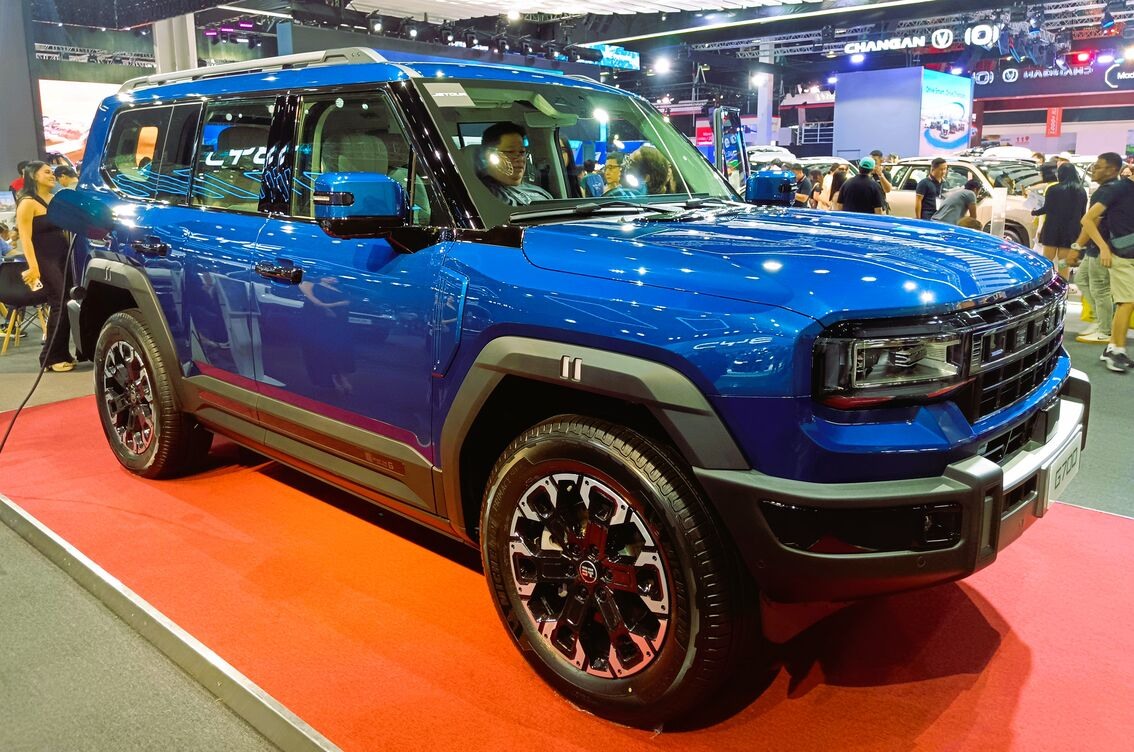
Launched at MIAS 2026, the G700 is a visual and physical heavyweight. Standing at nearly 5.2 meters long with an intimidatingly wide stance, it doesn’t just “compete” with established icons like the Toyota Land Cruiser and Nissan Patrol; it threatens to overshadow them. Built on a rugged body-on-frame chassis, it offers the structural integrity of a true off-roader while maintaining the presence of a high-end executive lounge.
Step inside, and the “rugged” exterior gives way to a digital sanctuary. The cabin is a masterclass in modern excess, dominated by a massive sunroof and a multi-screen array—including a 35.4-inch Skyline display—that leaves traditional physical buttons in the rearview mirror.
The real genius, however, lies beneath the sheet metal. Utilizing a sophisticated PHEV system, the G700 delivers a staggering combined range of 1,100 km. For the Filipino motorist weary of rising pump prices and the limitations of charging infrastructure, this range effectively banishes “range anxiety” to the history books. At a price point around P4.488 million, Jetour isn’t just offering a vehicle; they are offering a paradigm shift.
In the ‘90s, we wondered if Korean cars would last. In 2026, looking at the G700, the question isn’t about longevity—it’s about how much room the old guard has left.
Econo mobility: A Glimpse at the Changan Lumin
In the 1970s, the Philippine automotive landscape was defined by simplicity and thrift. We had the iconic Volkswagen Econo Beetle and the pint-sized Mitsubishi Minica—where “small” meant modest dimensions, cramped spaces, and equally small performance.
Fast forward to the 2020s, and the “small car” is enjoying a sophisticated renaissance. In the ICE corner, stalwarts like the Toyota Wigo, Suzuki S-Presso, and Mitsubishi Mirage continue to hold the fort. Meanwhile, the EV revolution has ushered in a new crop of contenders, including the VinFast VF 3, Chery QQ Ice Cream, and the BYD Seagull. But among this diverse field, one particular character caught my eye: The Changan Lumin, with its unmistakably charming “smiling” face.
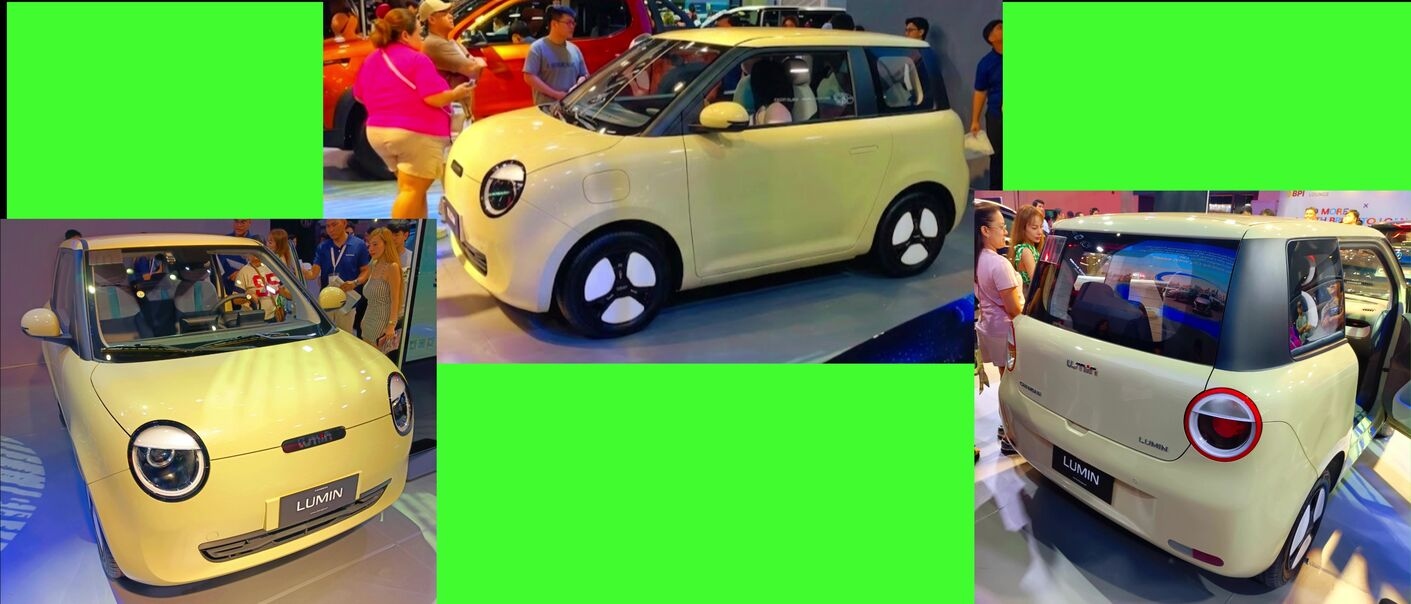
The Changan Lumin BEV is a stylish, ultra-compact city car engineered to blend “cute” aesthetics with genuine urban utility. Its distinctive front fascia, punctuated by circular LED-accented halogen headlamps that mimic eyes, makes it a literal standout in the burgeoning mini-EV segment.
Measuring just 3,270 mm in length, the Lumin is a dream to maneuver and park in our increasingly congested streets. Yet, despite the diminutive footprint, it sits on Changan’s EPA0 platform, which cleverly optimizes interior volume to accommodate four passengers. Inside, the cabin is a lesson in minimalist modernism, headlined by a 10.25-inch touchscreen and a sleek digital instrument cluster.
While its performance is tailored for the city, one can’t help but wonder: How would this “smiling” EV handle the steep, thin-aired inclines of Baguio? Whether you spot the standard or extended range variant, the Lumin is powered by a front-mounted electric motor producing 47 hp and 83 Nm of torque, topping out at 101 kph.
Filipino buyers can choose between two flavors of efficiency:
o Standard (17.65 kWh): Ideal for the daily grind with a range of 190–205 km.
o Extended range (28.08 kWh): Pushing the envelope to 301 km, making those occasional longer treks more viable.
It seems the “Econo” cars of today have traded their austerity for personality and plugs.
For my next deep dive, I returned to the brand that truly raised eyebrows last year: BYD. I recall the early years of the Manila International Auto Show (MIAS) prior to the PIMS era, when the hall felt like a duopoly—Toyota claiming a massive third of the floor on the right, while Mitsubishi anchored the left. This year, however, the tides have shifted. It was BYD, alongside Denza and the Uaagi group, who stepped into those giant shoes, signaling a new power dynamic in the local industry.
While the diminutive Seagull remains a personal favorite for its sheer pluck, nothing caught me off-guard quite like the arrival of the Sealion 7. Eager to get a feel for the cabin, I was met with a minor “bummer”—the doors were locked, and agents were strictly in “reservation-only” mode.
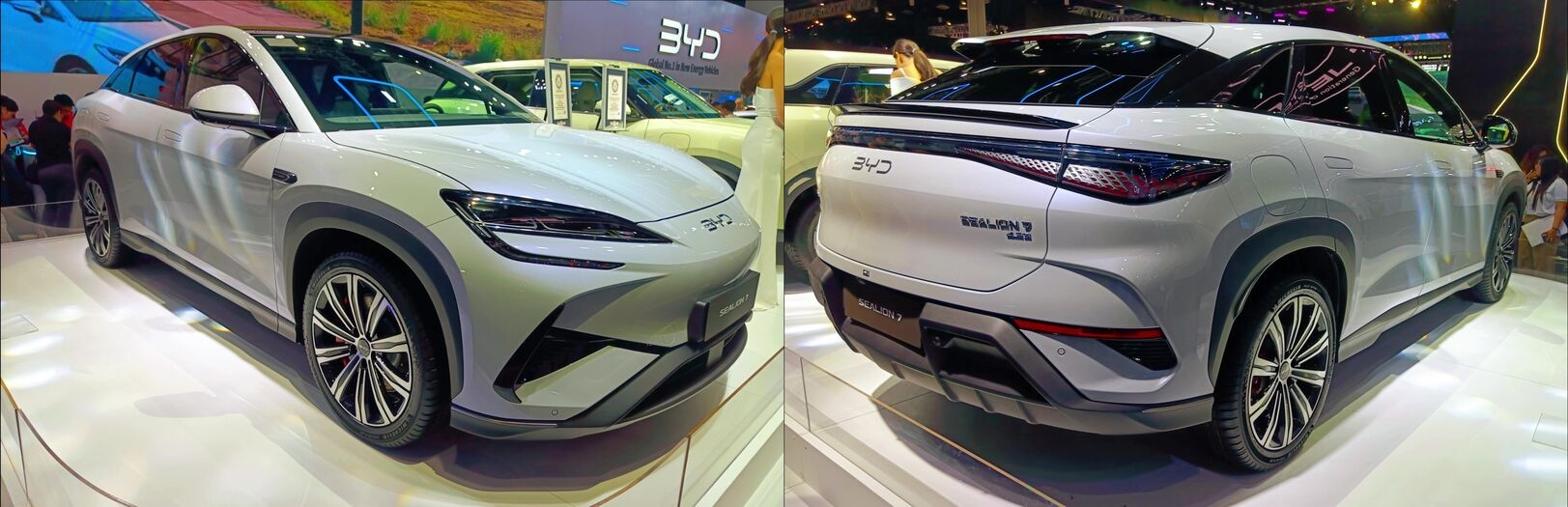
Left to peer through the glass, I can only assume it carries the hallmarks that have made BYD a household name: The signature Blade Battery for peace of mind and that mesmerizing rotating 15.6-inch touchscreen I first marveled at in the Atto 3 (and more recently, the Atto 2).
The Sealion 7 is no mere runabout; it is a sophisticated, all-electric mid-size SUV positioned as a direct challenge to the Tesla Model Y. Embracing the “Ocean Series” design language, it boasts a sleek, coupe-like silhouette with a sloping roofline and a futuristic front fascia. At 4,830 mm long, it sits on the advanced e-Platform 3.0, prioritizing cavernous interior room and structural rigidity.
With 150 kW DC fast-charging capable of juicing the battery to 80% in roughly 30 minutes, the Sealion 7 masterfully blends high-speed performance with modern family utility. If its road presence is any indication, this “Sealion” might just be the apex predator the Philippine EV market has been waiting for.
Yet, with the Sealion 7 set to co-exist alongside its Sealion 5 and 6 stablemates, one can’t help but wonder how BYD intends to manage the product lifespan of such a rapidly evolving fleet. In a market moving this fast, keeping a model fresh is as vital as the range it carries.
PTTC: Where time stands still amidst the chrome
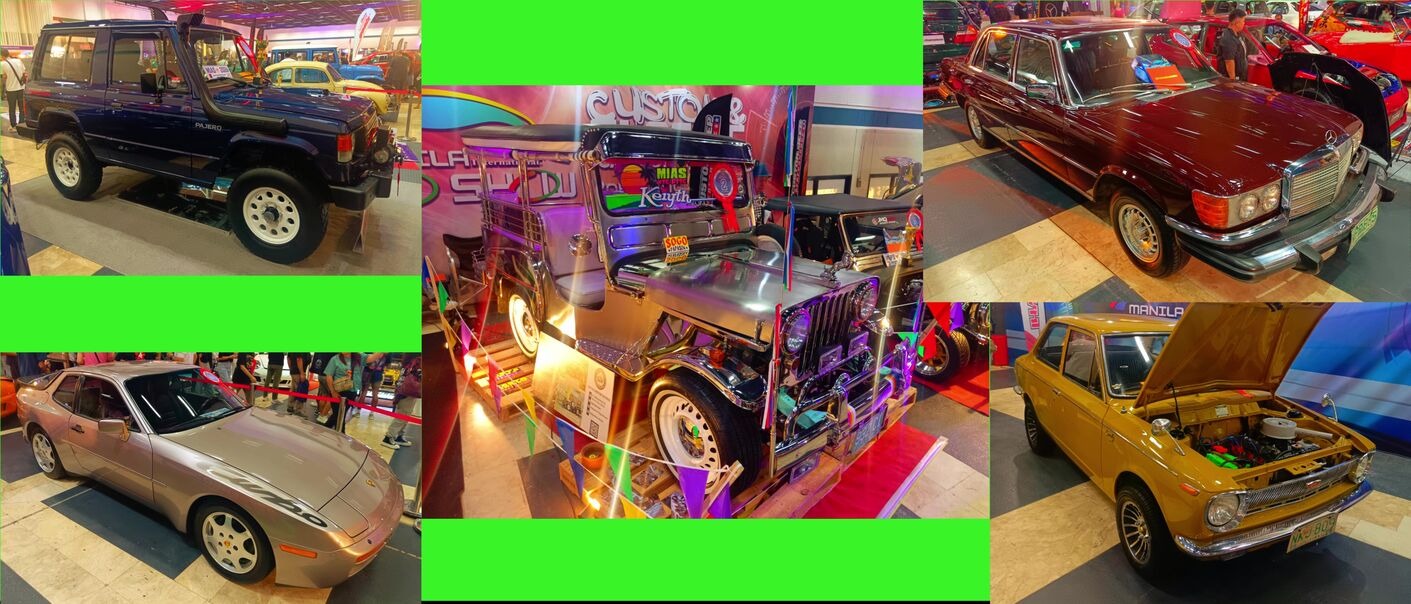
While the main halls of the WTC buzzed with the silent hum of the electric future, the PTTC served as the event’s beating, analog heart. It was a sanctuary of “old school” metal—a place for the young at heart to rediscover their roots and for the next generation to discover theirs. Between the wild custom builds and the meticulously restored classics, I found myself gravitating toward the latter. As a survivor of the ‘70s, ‘80s, and ‘90s, seeing a 1980 Mitsubishi Galant Lambda and a 1988 Lancer GT felt like stepping into a rift in time. It strikes me as a profound cosmic unfairness: The human body must age, yet with enough soul and steel, a car can remain forever young.
The Chameleon Galant Lambda
This mid-size coupe was a masterclass in restoration, having received a generous dose of TLC from Chameleon Auto Paint Specialist. Draped in its original factory hue and adorned with “new old stock” (NOS) trims and moldings, it was a vision of pure, unadulterated nostalgia. The attention to detail extended far beneath the sheet metal; the car was displayed over a series of mirrors, revealing a chassis so pristine it could pass for a showroom floor model. From the differential to the fuel tank and exhaust, every inch was color-matched and polished. Inside, the reupholstered leather seats—reminiscent of the gray hide found in the 1998-2002 Pajero Field Master—offered a tactile link to Mitsubishi’s premium past. Under the hood, the 4G52 “Silent Shaft” engine featured a welcome modern concession: Power steering. For a car (curb weight) weighing over a ton, that extra “muscle” is a godsend for low-speed maneuvers.
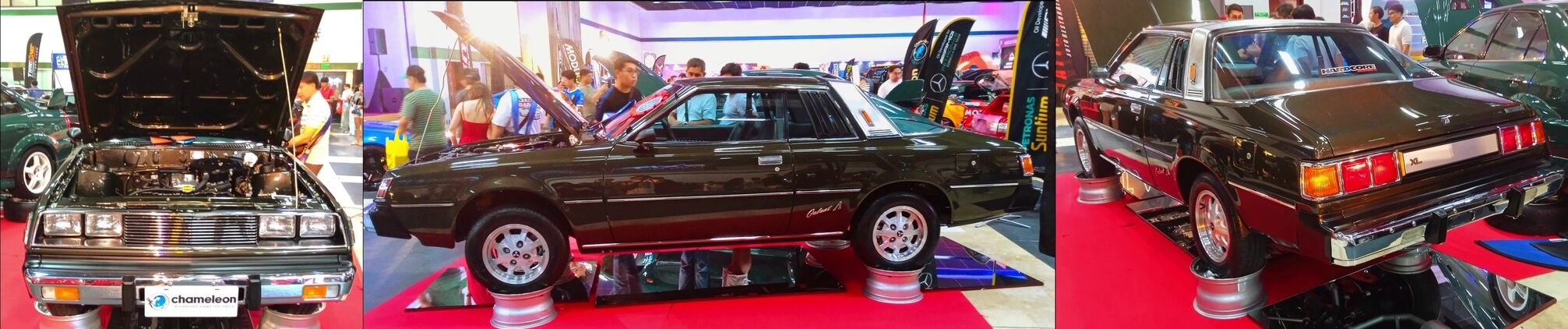
In my excitement, I found myself deep in the weeds discussing nitty-gritty details—from the period-correct rolled exhaust tips and pristine original badging to the Galant Lambda’s legacy as a true pioneer. It was, after all, one of the first—if not the first—mainstream models to bring the then-novel 5-speed manual transmission to the local market, forever changing our expectations of a “standard” gearbox.
So… I was so caught up in the nostalgia and technical shop talk that I completely forgot to snap my own photos of the Galant Lambda. Thankfully, the images you see here are courtesy of my friend Noel Victor Dolor II of the Automotive History Philippines Facebook page, who managed to capture what I was too busy admiring.
The 1988 Lancer GT: The time capsule
If the Lambda was a restoration triumph, the Lancer GT owned by Mr and Mrs Chito Ramirez was a miracle of preservation. It gave off the distinct vibe of a car that had been sealed in a vacuum-packed capsule for 35 years, only to be rolled out and waxed specifically for MIAS.
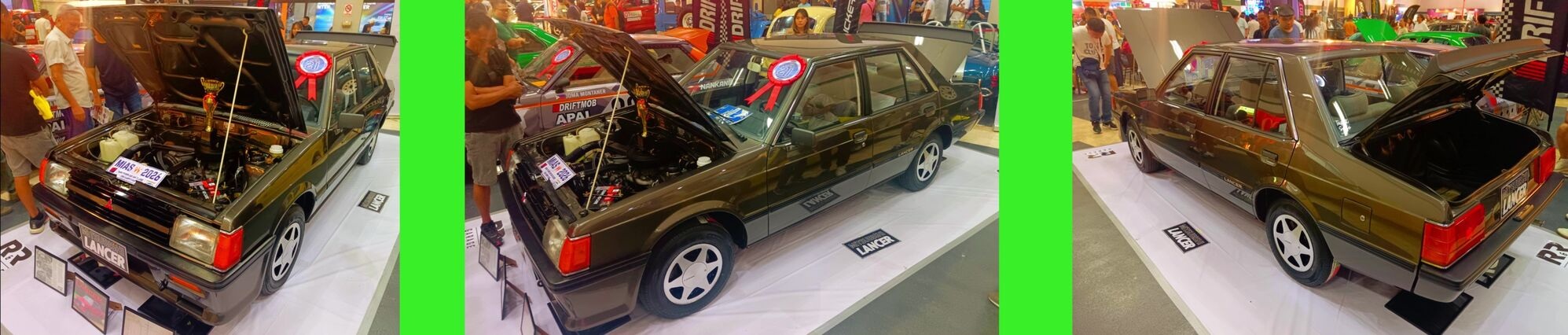
Exchanging notes with the owners about my own Mitsubishi pilgrimage to Japan, I couldn’t help but admire the GT’s period-correct simplicity. Its front air dam and rear spoiler are direct stylistic ancestors to the legendary 2000EX Turbo, the progenitor of the Evolution dynasty. It sat proudly on polished, period-correct original magwheels wrapped in thin yet stock 165/SR13 rubber. The interior was equally impressive; the GT-spec upholstery, a plush step above the base SL variant, remains soft to the touch. Interestingly, Chito later shared that he also owns the other iconic color for this variant—red—matching the dark gray example on display.
The long walk home: Reflections on MIAS 2026
I stepped into the halls of MIAS at 1 p.m., desperate to escape the blistering April heat. When I finally looked toward a window again, the world outside was already bathed in darkness. Time has a strange way of warping inside a motor show; it disappears when your “attention to detail” mode is locked in, when you’re deep in shop talk with fellow enthusiasts, or when you’re passing on a bit of gearhead wisdom to a curious stranger.

By the end of the day, my fitness tracker proudly displayed 21,000 steps—a badge of honor earned through miles of polished concrete. Even the logistical “hustle”—balancing a plate of food while waiting for a vacant chair in the crowded hall of PTTC—felt like part of the ritual. The energy is so relentless and the scale so vast that you find yourself wishing the show would run for a full week, though the organizers surely have their reasons for the 4-day sprint.

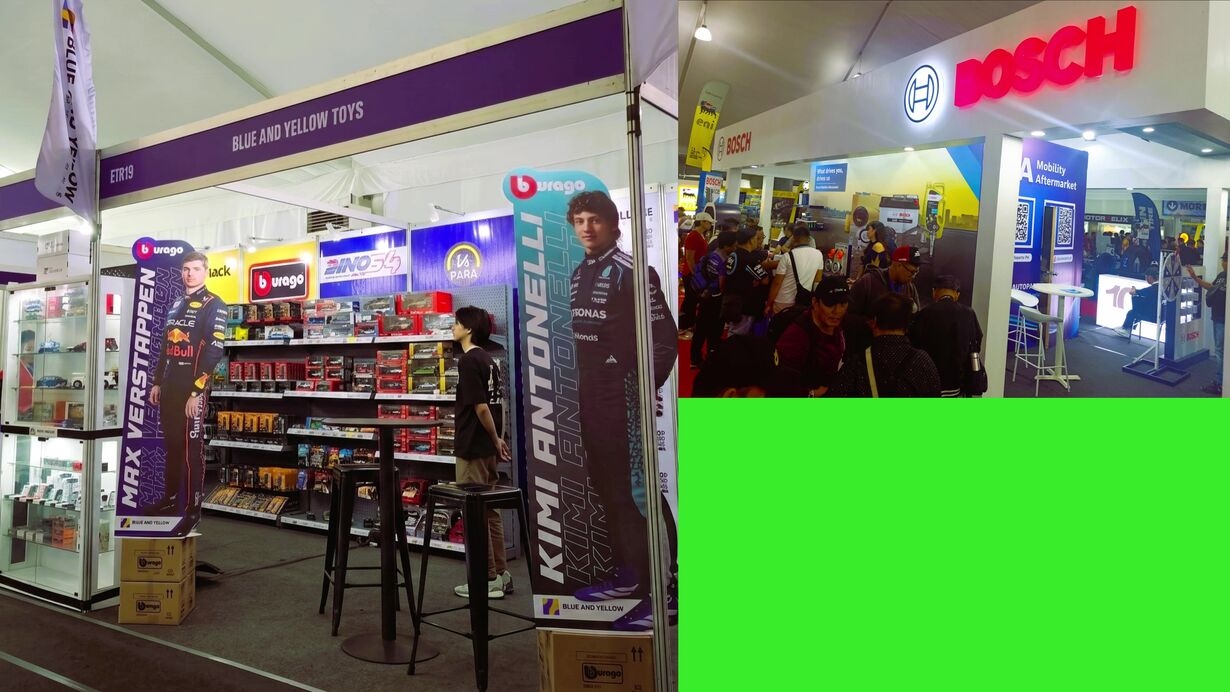
No MIAS visit is complete without a “budol” moment, and mine came at the Bosch booth. I walked away with a set of wiper blades for my Galant—a P1,500 pasalubong that came with the quintessential car show freebies: A ballpen and some windshield washer concentrate. I also owe a debt of gratitude to my friend Rhuel Ryan Valiente of Blue and Yellow Diecast Toys for the complimentary pass; in a weekend of high-octane spending, that gesture was much appreciated.
The only box left unchecked on my itinerary was the test drive. The sheer volume of enthusiasts meant the queues were long, and by the time I made my move, I had already missed the cutoff. But I’m not losing sleep over it. With a dedicated outdoor test drive event looming on the horizon, that will be a different story for a different day.
To see more highlights of the 2026 Manila International Auto Show, visit https://manilaautoshow.com/.