
TessDrive brings you the latest breakthroughs in domestic scientific engineering, intelligent urban mobility frameworks, and digital systems transforming public health and smart transit across Philippine cities.
UP chemist co-develops first Filipino air monitor
The World Health Organization (WHO) emphasized this year that air quality monitoring is crucial for understanding the health effects of air pollution and tracking efforts in reducing it.
Combining scientific inquiry and engineering in air quality research, Dr. Len Herald Lim of the University of the Philippines-Diliman College of Science’s Institute of Chemistry (UPD-CS IC) co-developed the Robust Optical Aerosol Monitor (ROAM)—the first Filipino-made air quality monitoring device—in 2014.
ROAM’s performance is comparable to contemporary aerosol monitoring devices used in industry and by the Department of Environment and Natural Resources-Environmental Management Bureau (DENR-EMB). Lim collaborated with engineer Paul Alexander Darvin of UP Los Baños-Department of Electrical Engineering on this project, which started as a simple air quality measurement idea and evolved into an innovation.
“In a sense, ROAM is an air microscope. If you’ve experienced microscopy before, like cell counting under a microscope, this is very similar. The difference is that instead of cells, what we are counting are particles in the air,” Lim shared during the sixth Innovation Impact Stories webinar of the UPD-CS Innovation Program. He also noted that the equipment and the device setup are not dependent on machining very small parts.
Project ROAM’s first real long-term deployment was in Cauayan, Isabela. “The unit stayed there for about 6 to 8 months. There wasn’t anything particularly dramatic about it, except that it was placed in a dusty environment,” he said. He further explained that the air quality monitor used by the DENR-EMB cannot just be placed anywhere, especially in very polluted environments, because after some time it would need maintenance or repair.
When the unit was returned, it was initially assumed to be damaged; however, upon inspection, it was found to still be functional.
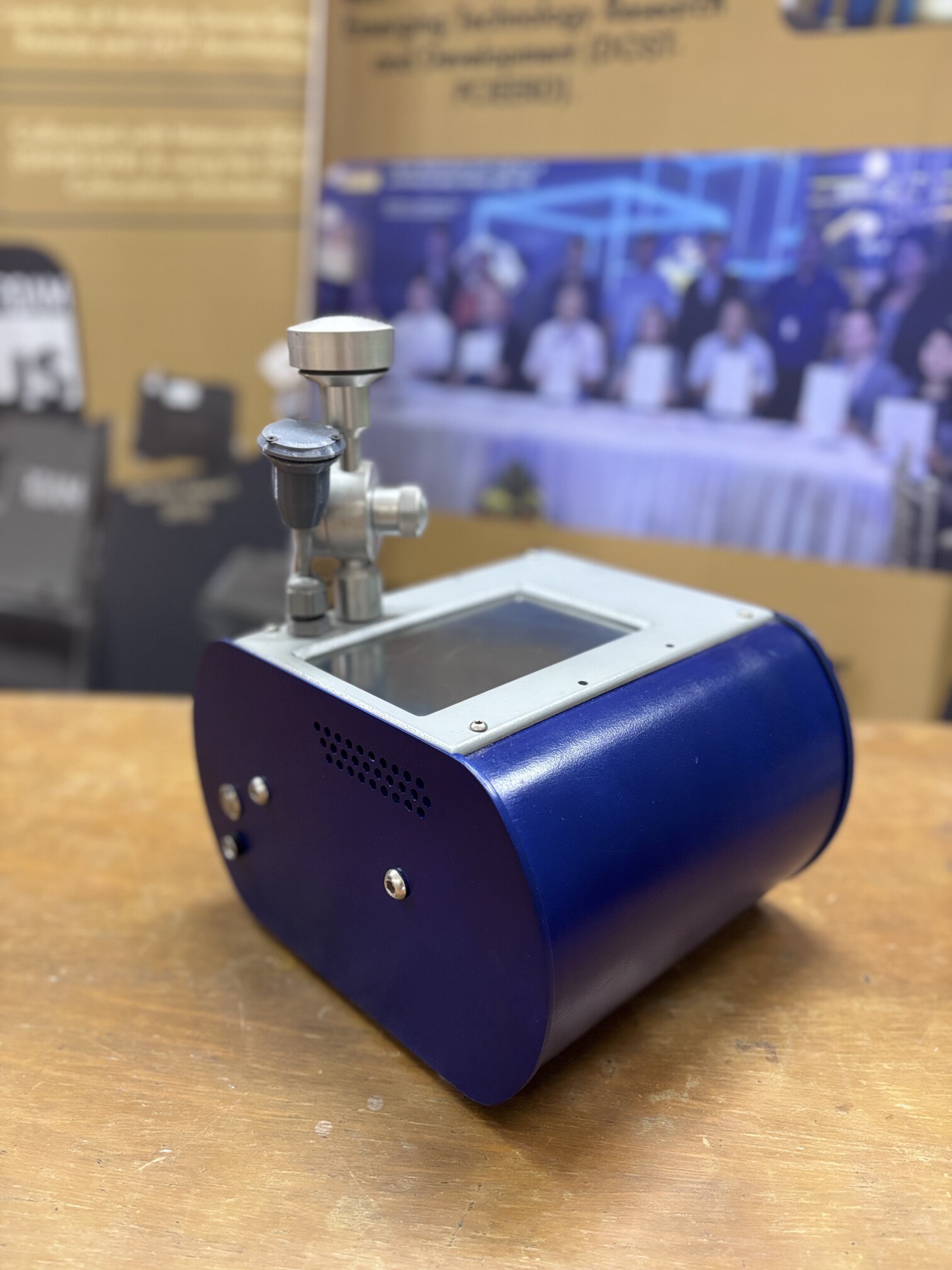
“It was impressive because I really expected it to be completely clogged. The outside of the unit was so dirty, but it was still working. That’s because it doesn’t rely on a pinhole—it functions like a microscope,” Lim remarked. “And since it works like a microscope, its saturation limit is much higher than normal air monitoring equipment.”
Aside from Isabela, their farthest deployment was in South Cotabato, where the unit remained functional after being left unattended in the area for nearly 6 months. Repairs for ROAM were also inexpensive, which made it difficult for people to believe it was high-quality equipment.
“Right now, we’ve found that the best adopters of this technology are local government units (LGUs). That was actually how we positioned and advanced Project ROAM. People started coming to us—we didn’t even know who referred them,” Lim concluded.
For inquiries about Innovation Impact Stories, message cs.innovation_committee@science.upd.edu.ph (Story courtesy of Eunice Jean C. Patron/UPD-CS Science Communications)
How integrated MaaS tech could reshape cities
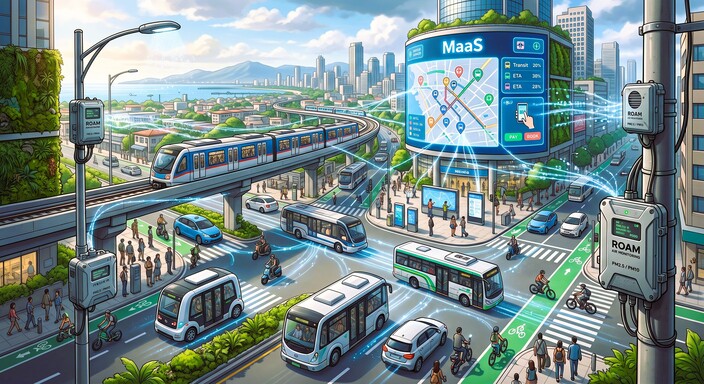
Rapid urban growth and heavy traffic congestion are driving cities toward Mobility-as-a-Service (MaaS)—a unified digital approach designed to coordinate disconnected transportation modes. Rather than navigating separate apps for ride-hailing, public transit, and micro-mobility, commuters can plan, book, and pay for multi-leg journeys on a single platform. This shifts the urban transport paradigm from private vehicle ownership to seamless, on-demand mobility access.
The role of AI and driverless fleets
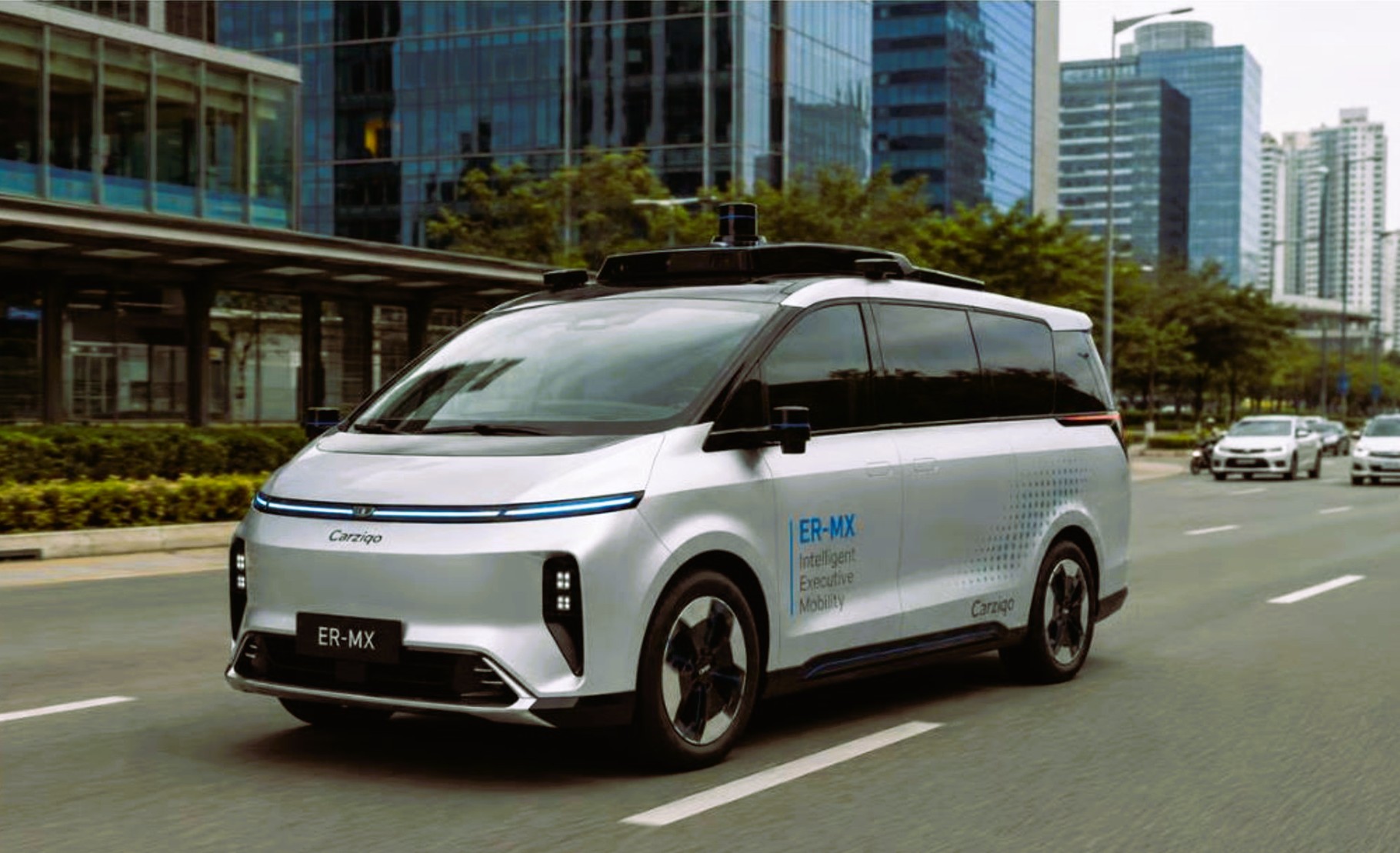
Artificial intelligence forms the backbone of these ecosystems, managing dynamic route planning, predictive dispatching, and real-time fleet maintenance. Integrating autonomous vehicles takes the model further by removing driver-availability bottlenecks. Centralized systems can intelligently deploy driverless shuttles during peak commuting hours and schedule maintenance or charging during off-peak windows to optimize fleet utilization.
High potential for Philippine urban centers
For transit landscapes like Metro Manila, where passengers routinely combine jeepneys, buses, trains, and ride-hailing services, MaaS offers significant practical value. An integrated platform helps bridge first- and last-mile transit gaps without replacing existing public transit options. To succeed locally, these systems must prioritize broad economic accessibility, inclusive mobile design, and support for legacy devices and diverse payment methods.
Expanding beyond passenger travel to logistics
The MaaS framework extends naturally into urban logistics and last-mile delivery fleets. Because freight and passenger transport share underlying requirements like route optimization and fleet monitoring, a unified platform can balance vehicle allocation dynamically—prioritizing commuter traffic in the morning and shifting fleet capacity to parcel deliveries during lighter traffic periods.
Navigating regulation, safety, and trust
Broad adoption hinges on resolving hurdles around data privacy, cross-operator interoperability, and passenger safety. Autonomous fleets demand stringent safety protocols alongside clear regulatory frameworks. Realizing the full potential of MaaS will require long-term public-private collaboration to link vehicles, municipal infrastructure, and digital platforms into one cohesive network.
To read the full story on VRITimes Philippines, click this link: https://www.vritimes.com/ph/articles/abecf9a4-e74d-4ade-9e89-504a5e027485/4d40e7b5-1556-4650-8115-63ecbade9dd2