
(The following article is a synthesis of a report by Nicole Axworthy for VegNews.com, posted on Feb. 12, 2026. To read the full report, click this link: https://vegnews.com/older-adults-vegan-less-medication)
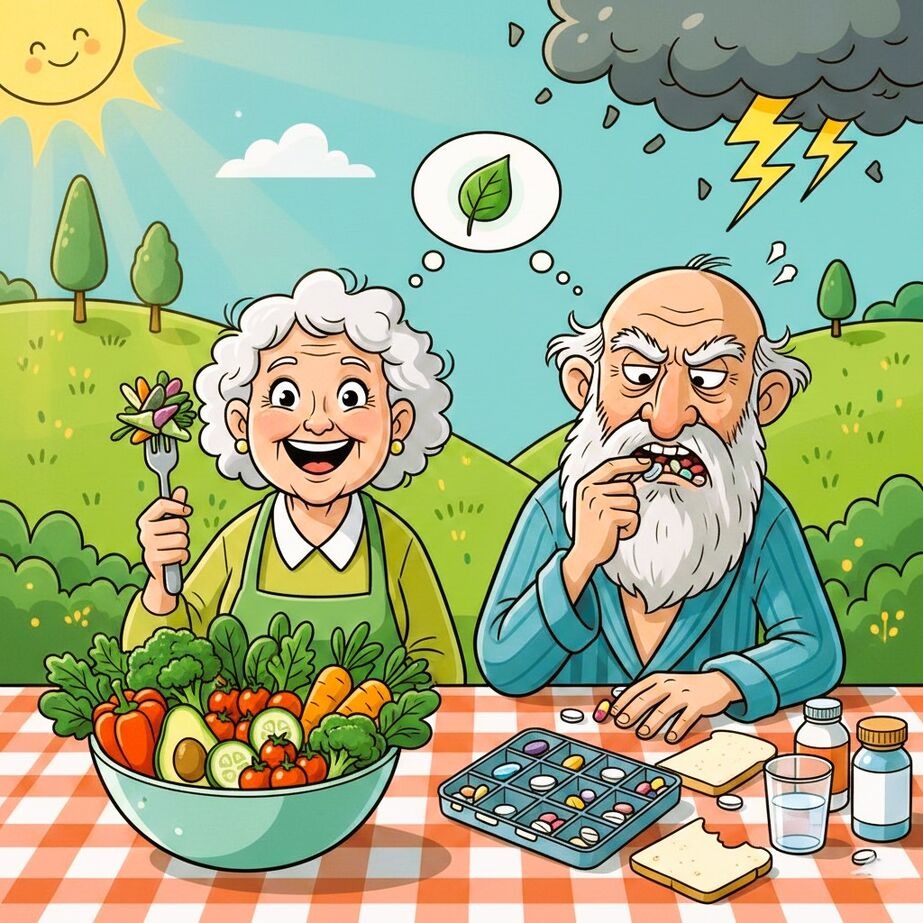
A new study published in the American Journal of Lifestyle Medicine reveals a striking correlation: Older adults who follow a vegan diet take 58% fewer medications than their meat-eating counterparts. The research specifically investigated the link between diet and “polypharmacy,” a condition where a patient takes five or more prescription drugs daily.
Polypharmacy is a significant health concern for seniors. The researchers noted that individuals taking more than 5 medications a day face an 88% higher risk of adverse drug interactions and higher mortality rates. Data collected from 328 participants over the age of 60 at Loma Linda University confirmed that while medication use typically increases with age and body mass index (BMI), those on a plant-based diet consistently required the least pharmaceutical intervention. The authors concluded that a vegan diet acts as a protective shield, likely by preventing the chronic conditions that necessitate heavy medication in the first place.
This finding aligns with a broader wave of scientific evidence supporting plant-forward living for all ages. For instance, research published in the Journal of Urology linked plant-based diets to a lower risk of prostate cancer in men under 65. Furthermore, a study from Stanford University indicates that swapping animal meat for plant-based alternatives can significantly lower LDL cholesterol, while a separate study in the journal Foods found that eating just 5 plant-based meals a week boosts gut bacteria that reduce inflammation.
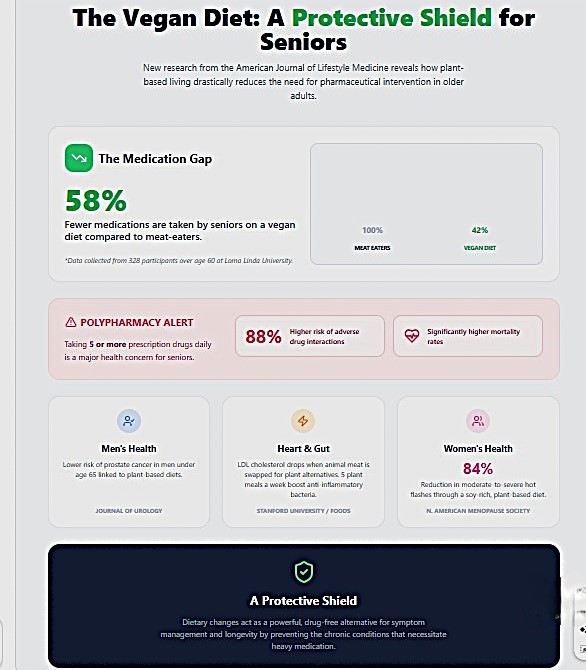
The benefits extend specifically to women’s health as well. Research published by the North American Menopause Society demonstrates that a plant-based diet rich in soy can reduce moderate-to-severe hot flashes by up to 84%. With nearly 80% of menopausal women suffering from these symptoms, these findings suggest that dietary changes offer a powerful, drug-free alternative for symptom management and overall longevity.