
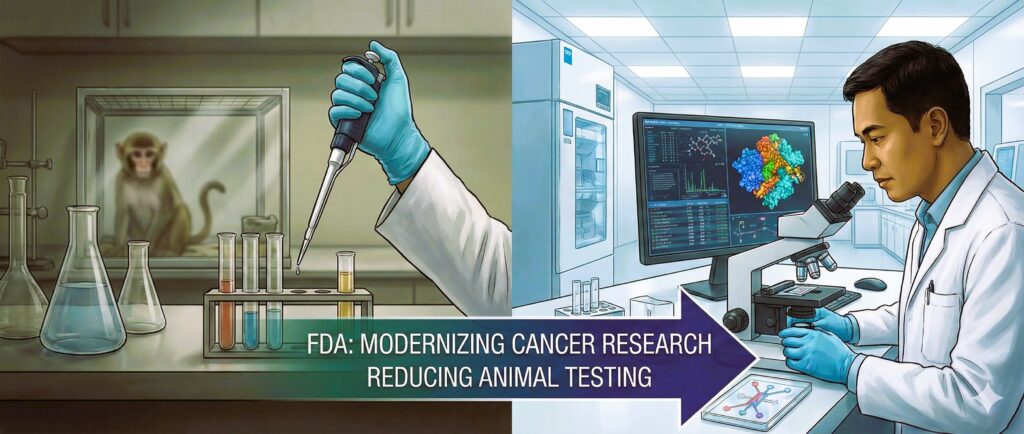
The United States Food and Drug Administration (FDA) is taking a significant step toward modernizing medical research by reducing the pharmaceutical industry’s reliance on animal testing. A new draft guidance specifically for monoclonal antibody cancer drugs suggests that developers can now bypass animal toxicity studies if sufficient human-based data exists. This marks a pivotal shift away from the traditional use of non-human primates for pharmaceutical safety testing.
Currently, the development of monoclonal antibodies—treatments often used for breast cancer and melanoma—relies heavily on macaque monkeys. A single nonclinical program can involve over 100 primates, with each animal costing approximately $50,000. Beyond the staggering financial implications, this practice has long raised serious ethical concerns regarding the welfare of these animals. The new guidance aims to alleviate these burdens by prioritizing modern alternatives.
This move aligns with the FDA’s broader “Roadmap to Reducing Animal Testing in Preclinical Safety Studies,” released in April 2025. Instead of animal models, the agency is encouraging the adoption of advanced human-centric alternatives. These include sophisticated computer modeling and “organ-on-chip” technology, which can simulate human biological responses more accurately than animal physiology.
The scientific argument for this transition is compelling. Data from Animal Free Research UK highlights that 92% of drugs that succeed in animal trials ultimately fail in human clinical trials. Despite sharing genetic similarities, macaques and humans have distinct biological differences, meaning a drug deemed safe for a monkey may still pose risks to a human patient.
Advocacy groups view this as a watershed moment. Wayne Pacelle, president of Animal Wellness Action, described the guidance as a “concrete and potentially game-changing move.” He notes that the industry has historically stuck to animal models due to regulatory inertia, but the FDA is now signaling a willingness to break these long-standing habits in favor of a more scientifically grounded system.
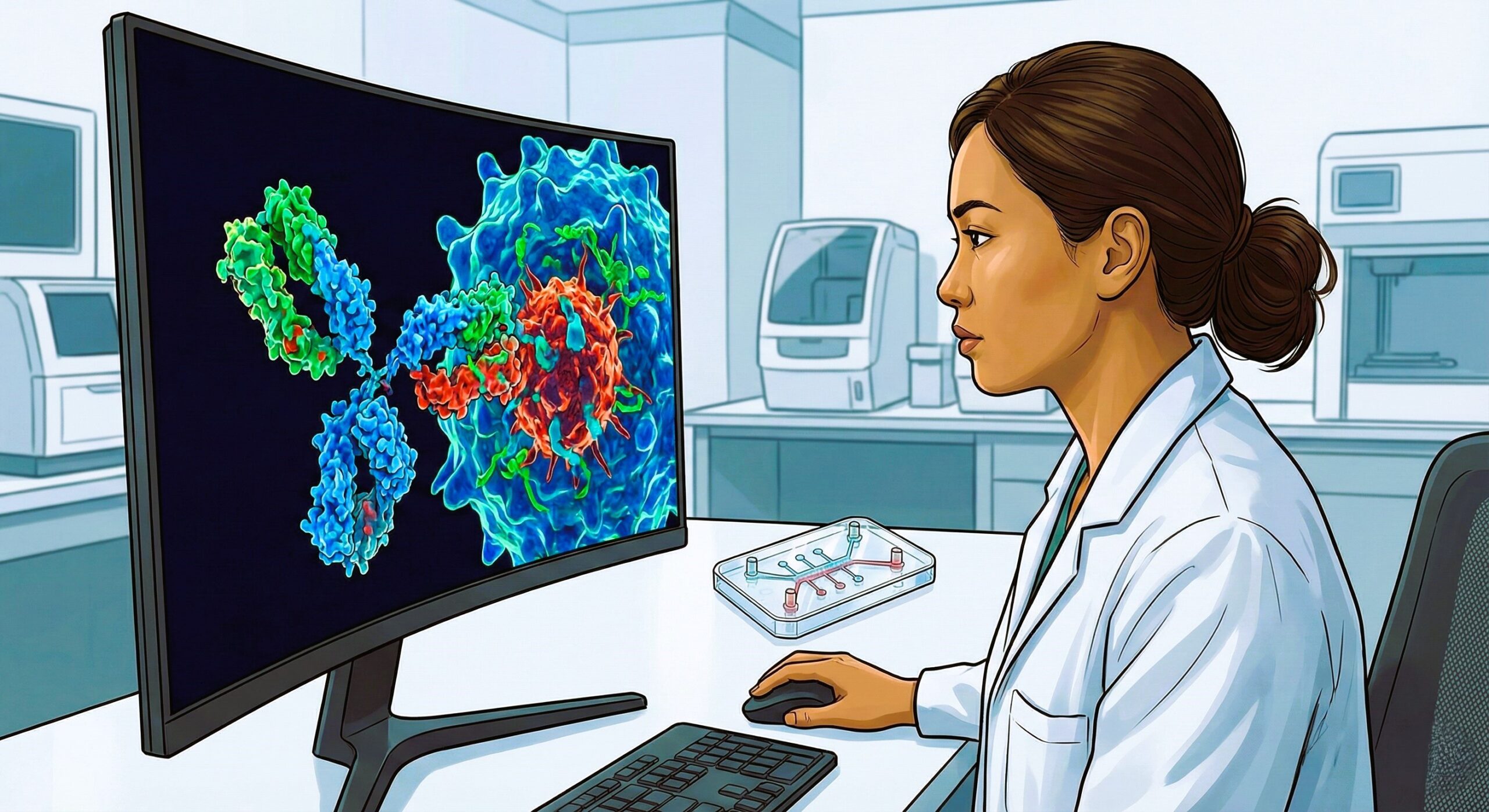
The United States isn’t alone in this progressive shift. The United Kingdom recently announced its own roadmap to phase out animal testing, championed by Science Minister Patrick Vallance. Both nations are pivoting toward AI models and human-centered technology, reinforcing a global trend that prioritizes safer, more accurate, and humane scientific innovation.
(Editor’s note: This story is based on an article by Charlotte Pointing posted Dec. 17, 2025 in VegNews.com. To read the full article, click here: https://vegnews.com/fda-animal-testing)