
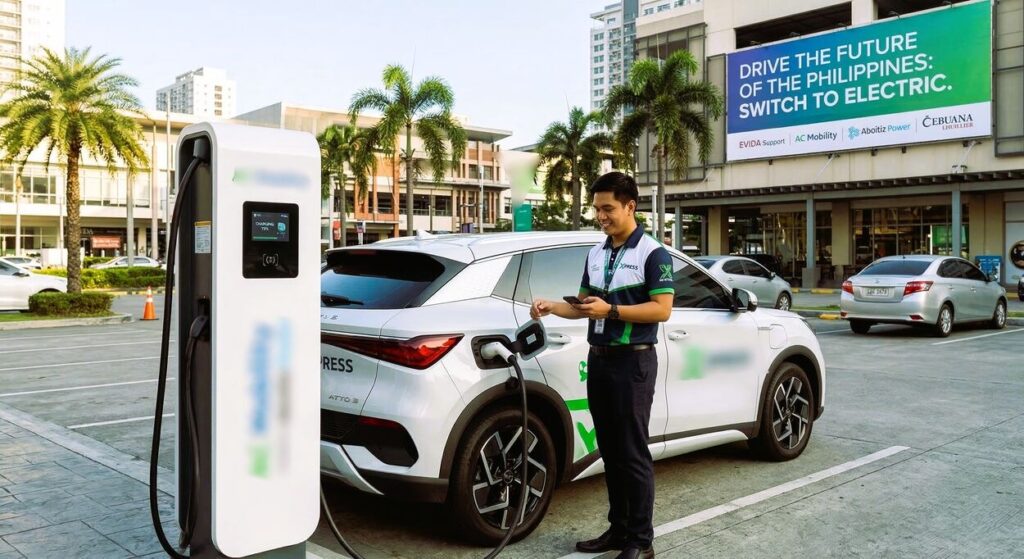
As the post-Lunar New Year rush picks up speed, a significant shift is happening on Philippine roads. Xpress, the local multi-modal mobility giant, is reporting a surge in drivers migrating toward hybrid and battery electric vehicles (BEVs). What was once a niche environmental choice is rapidly becoming a calculated financial strategy.
The transition is no longer happening in a vacuum. Under the Electric Vehicle Industry Development Act (Evida), the Philippines has seen a steady rise in registrations. This growth is bolstered by heavy-hitters in the private sector:
AC Mobility (Ayala Corp): Expanding the retail footprint and charging network for global EV leader BYD.
Aboitiz Power: Strengthening the renewable energy grid to ensure the “green” transition is powered sustainably.
Cebuana Lhuillier: Providing the financial bedrock and investment support to ensure long-term stability for the platform.
Logic over luxury
For the modern driver, the move to electrification isn’t about optics—it’s about the bottom line. Xpress notes that as charging infrastructure becomes more visible and vehicle supply stabilizes, the “range anxiety” of previous years is being replaced by “income stability.”
“Drivers are making rational upgrade decisions,” Xpress said in a statement. “Lower fuel costs, more predictable maintenance, and reduced downtime directly improve daily take-home pay.”
By removing the volatility of fluctuating pump prices, drivers are finding that EVs offer a more disciplined way to manage their daily overhead.
A stabilizing ecosystem
The participation of major financial and energy players has signaled to the workforce that the electric transition is a permanent fixture, not a passing trend.
“When established automotive, energy, and financial institutions invest in electrification infrastructure, it reduces uncertainty across the value chain — particularly for drivers evaluating long-term vehicle decisions,” the company added.
According to data from Xpress, those transitioning to hybrid or electric platforms cite four primary advantages: Significant energy savings, drastic reduction in daily “fuel” spend; maintenance predictability, simplified mechanical systems lead to fewer surprise repairs; lower volatility, more consistent daily earnings regardless of global oil markets; and future-proofing, enhanced long-term viability of their vehicle assets.
Ultimately, Xpress maintains that while the environmental perks are a bonus, the driver’s wallet remains the priority.
“Sustainability must work financially. Adoption strengthens when income stability improves and infrastructure development becomes measurable,” Xpress said.

Through strategic partnerships and a focus on infrastructure-aligned growth, Xpress is proving that the path to lower-emission mobility in the Philippines is paved with sound economic incentives.
Xpress is a Philippine-based mobility platform operating taxi, motorcycle taxi, and ridesharing services. The company focuses on sustainable fleet expansion, disciplined infrastructure alignment, and long-term driver professionalization.
This article was adapted from a news release by VRITimes Philippines. For the original article and further details, visit https://www.vritimes.com/ph.