
By Tessa R. Salazar
The Philippines currently endures some of the most expensive electricity rates in Southeast Asia, compounding an ongoing national energy challenge. Skyrocketing fuel costs and their direct hit on power bills are testing public patience. At present, our primary source of electricity remains coal-fired power plants. Because the country does not produce coal in sufficient volume, we import it using US dollars. As exporting nations impose export limits and global supply tightens, the cost of imported coal continues to climb.
Studies conducted by experts from the Department of Science and Technology–Philippine Nuclear Research Institute (DOST-PNRI) reveal that an average Filipino household spends 10 to 15% of its total income solely on electricity bills.
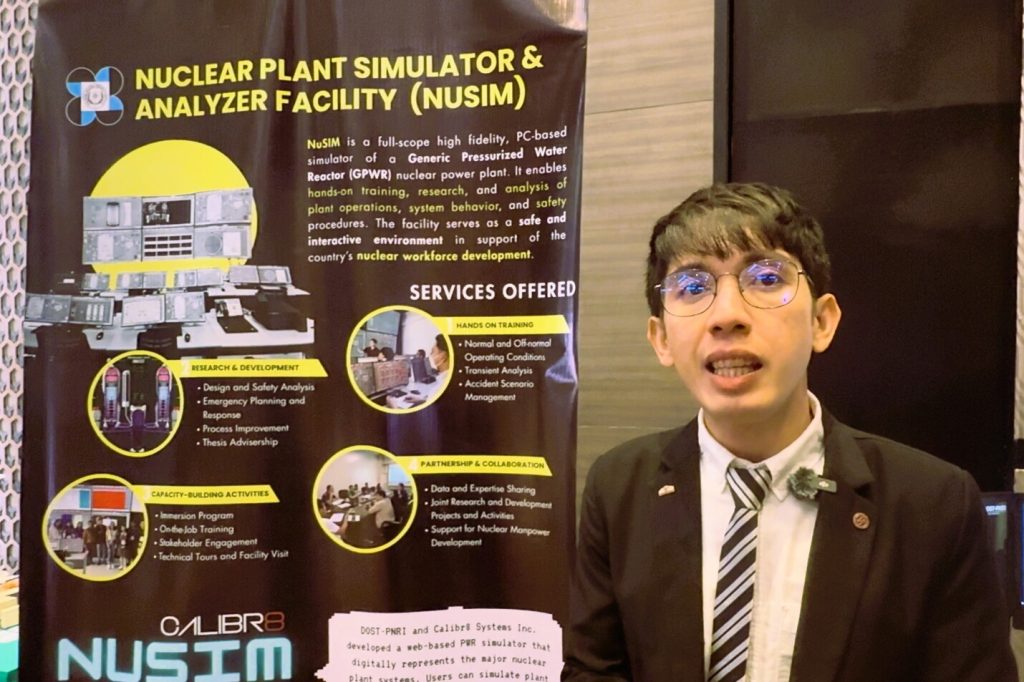
“We compared this to countries that utilize nuclear energy, where less than 1% of household income goes toward electricity. Imagine, in our case, up to 15% goes purely to power bills. Imagine if families could redirect those funds toward education, food, housing, and other essentials,” said Mark Gino Aliperio, a nuclear power plant engineer from DOST-PNRI and project leader of the Nuclear Plant Simulator for R&D and Capacity Building (NuSim) Project.
NuSim—short for Nuclear Plant Simulator and Analyzer Facility—officially serves as a foundational platform for capacity building, operational workforce development, and advanced engineering simulations within the country’s broader energy strategy.
Aliperio spoke during the DOST Science and Technology (S&T) Fellows Convention held Sept. 30 at The Bellevue Hotel Manila in Alabang. An S&T Fellow deployed at DOST-PNRI, Aliperio lends his technical expertise to policy, research, and infrastructure strategies aimed at addressing national energy vulnerabilities.
Why is nuclear energy regarded as a viable long-term solution? Aliperio pointed directly to energy diversification.
“Right now, we are heavily reliant on imported fossil fuels because we lack domestic reserves. With the peso under pressure, buying these fuels in foreign currency makes power generation exceptionally costly. That is why consumers feel the squeeze directly,” Aliperio explained.
“One vital solution is to aggressively expand our energy mix with clean sources: Solar, wind, hydro, and nuclear. However, variable renewables depend heavily on weather conditions. Without sunlight, there is no solar generation; without steady wind, wind turbines cannot produce power. Nuclear energy provides steady, continuous baseload capacity to back up renewables when they dip. That is why nuclear is essential to securing our energy future.”
Longevity is another cornerstone of the nuclear equation.
“A nuclear plant has a typical design life of 60 years, which can often be extended to 80 years,” Aliperio noted. “Nuclear fuel is equally cost-effective over time. A single batch of nuclear fuel lasts five years. Unlike coal or oil plants, which require continuous fuel deliveries and constant expenditures, nuclear fuel is procured upfront and runs reliably for half a decade. Over those five years, it generates round-the-clock baseload power with zero greenhouse gas emissions.”
Public perception remains central to the viability of any nuclear initiative.
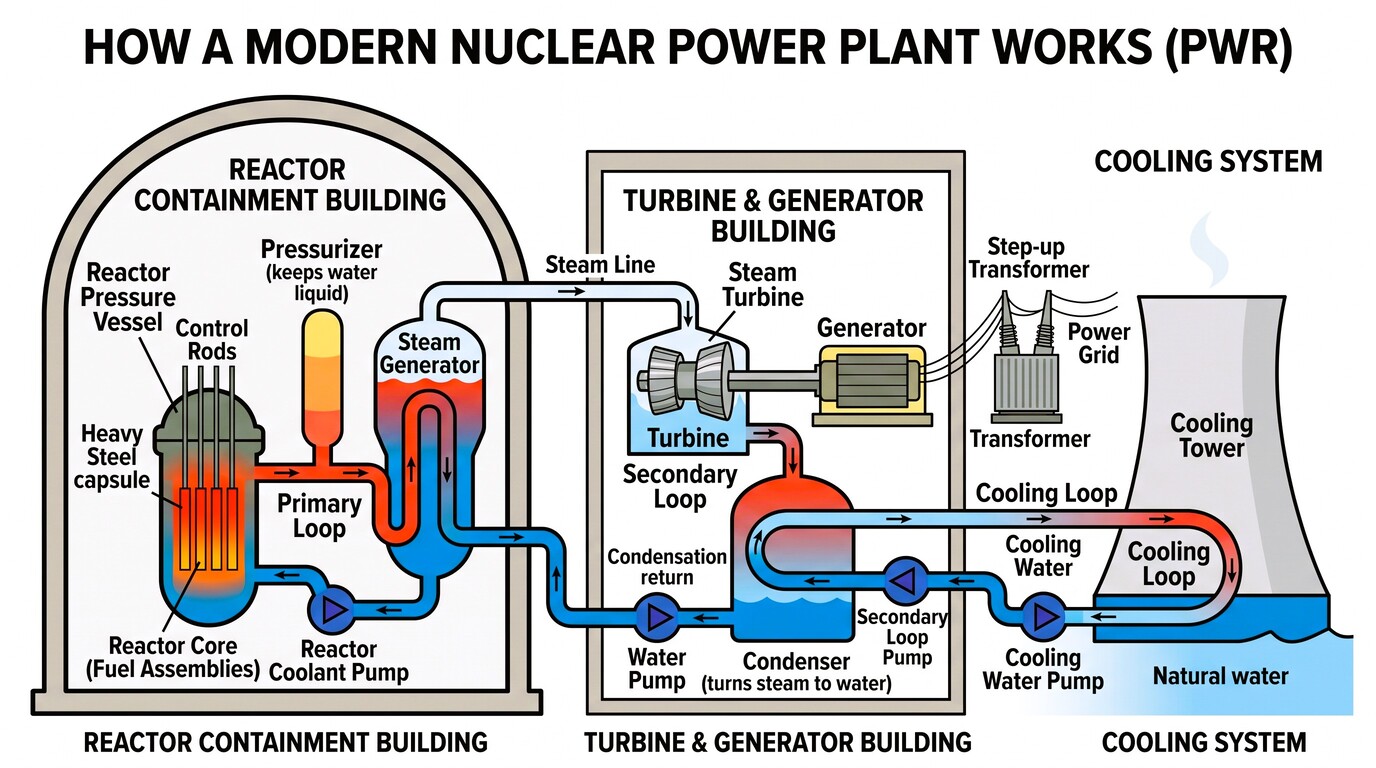
“For a national nuclear program to succeed, public acceptance is paramount. Back when I was a student, local acceptance hovered around 50%. Today, based on Department of Energy perception surveys, public support for nuclear power has climbed to roughly 80%,” said Aliperio.
“A primary driver behind this shift is the steep cost of living driven by electricity rates. While valid concerns remain, our priority must be public education—demonstrating how modern nuclear technology functions safely and the tangible socioeconomic relief it can deliver.”
When asked when Filipinos might see tangible drops in electric bills if a nuclear roadmap begins immediately, Aliperio emphasized patience and grid realities.
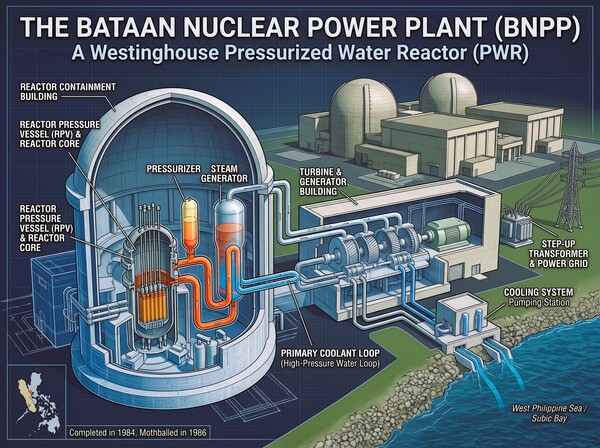
“Nuclear energy is a structural solution, not an overnight switch. The national target aims for an operational nuclear facility by 2032—6 years from now—delivering approximately 1,200 megawatts to the grid. To put that in perspective, had the Bataan Nuclear Power Plant (BNPP) operated in the 1980s, it could have supplied a third of the Luzon grid. If operated today, BNPP’s capacity would only represent around 5% of Luzon’s total demand. At 5%, the immediate downward impact on power rates would be modest.”
Aliperio added: “Over the long haul, as we expand nuclear alongside renewables and displace imported fossil fuels, the public will genuinely feel power rates stabilize. Relying on imported oil and coal leaves us vulnerable to overseas conflicts thousands of kilometers away. We must anchor our grid on dependable, domestic sources.”
Surging EV adoption demands more grid capacity
Addressing the rapid adoption of electric mobility, Aliperio noted that EV drivers stand to gain significantly from nuclear baseload power—provided the grid prepares in time.
“Electric vehicles are gaining rapid traction locally because pump prices remain volatile,” he observed. “However, EVs run on the grid. As adoption climbs, demand for electricity will surge alongside it. Without adding substantial, clean power generation, EV charging will place further pressure on existing supply. If that rising demand is served primarily by expensive imported fossil fuels, power rates will inevitably climb. Nuclear energy offers the reliable, high-capacity generation needed to keep EV running costs genuinely affordable.”
Since its launch in 2021, the DOST S&T Fellows Program has engaged 84 science, technology, and innovation experts across DOST research institutes, advisory councils, and regional offices, with 51 active Fellows currently steering key national research and development initiatives.
To know more about the Philippines’ research and developments in nuclear energy, visit https://www.pnri.dost.gov.ph/.
Banner image: Aliperio says nuclear energy is not an overnight switch. The earliest PH can have a safe, working nuclear plant is in 2032