
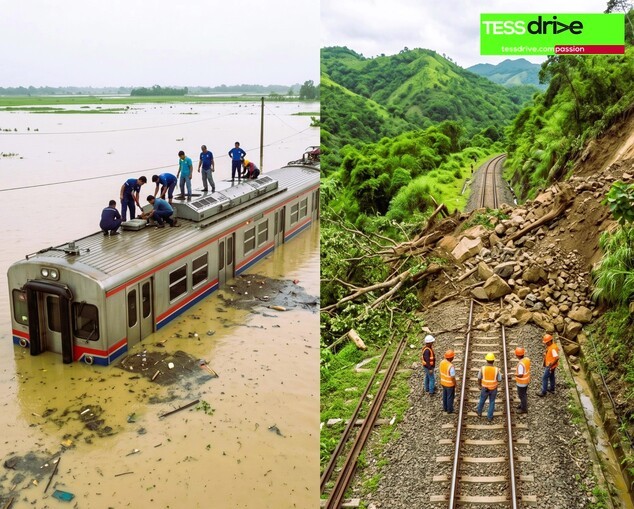
“The PNR (Philippine National Railways) faces severe environmental challenges.”
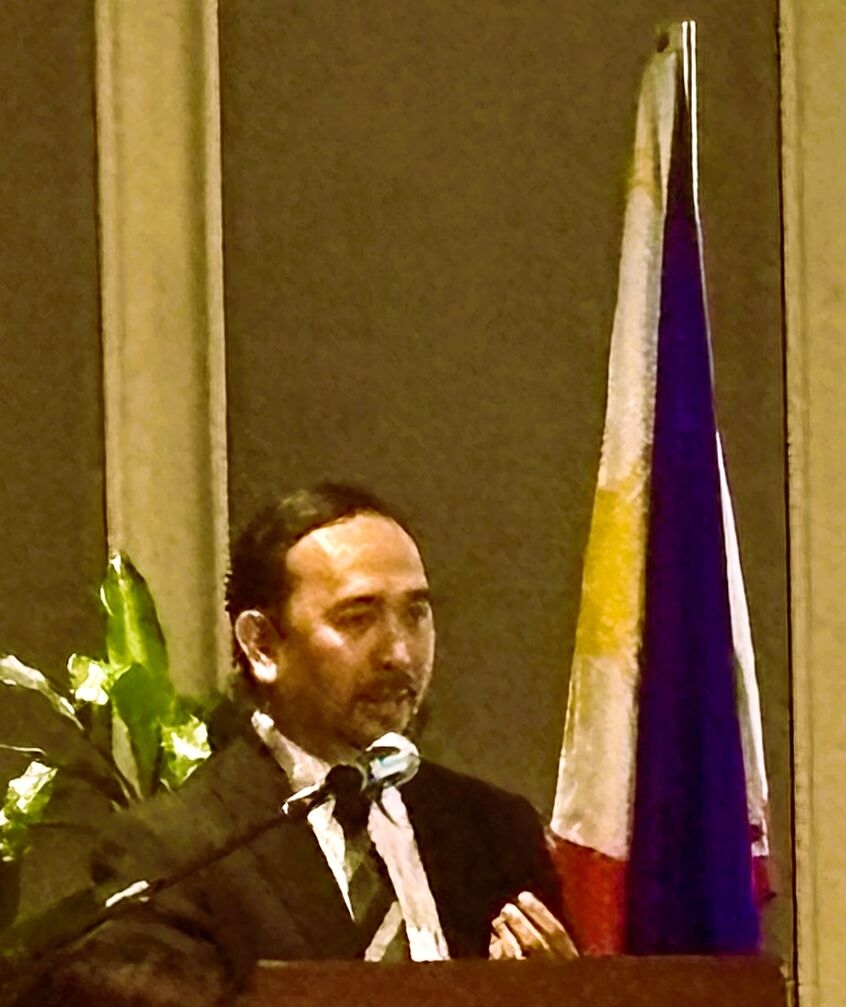
This statement came from no less than PNR General Manager Deovanni Miranda, during the recent Policy-to-Practice roundtable forum called “Advancing Sustainable and Efficient Urban Mobility” at the Makati Diamond Residences.
“When I assumed the GM role, the first major calamity we encountered was Typhoon Kristine. Three of our operational train sets in Naga were completely submerged by floodwaters. Through a bayanihan effort by our mechanics, mechanical engineers, and technicians, we restored two of those submerged sets. They are running safely today, albeit under controlled operational limits.”
Frequent landslides
The southern PNR network is plagued not only by recurring floods but also by frequent landslides along its Quezon sector.
“As part of our ongoing rehabilitation to build a more reliable 423-km infrastructure, we are conducting fresh geotechnical assessments and soil studies in landslide-prone zones across Quezon and Camarines Sur,” Miranda explained. “This will ensure the line remains operationally viable and climate-resilient for years to come. Maintenance funding also remains a primary bottleneck. Beyond basic repairs, maintaining a 423-km track requires continuous ballast replenishment. In several southern sectors—particularly around Calamba and Lucena—certain track sections have not been re-ballasted since the 1990s,” said Miranda.
The roundtable session was hosted by the Swiss Chamber of Commerce of the Philippines (SwissCham Philippines) and the All Transport Network (ATN). The forum convened government officials, infrastructure experts, and private-sector leaders to address Metro Manila’s mobility crisis through strengthened public-private collaboration.
A climate-resilient PNR
Updating the audience on the PNR’s operations, Miranda shared his team’s persistent efforts over the past two years to secure modernization funding.
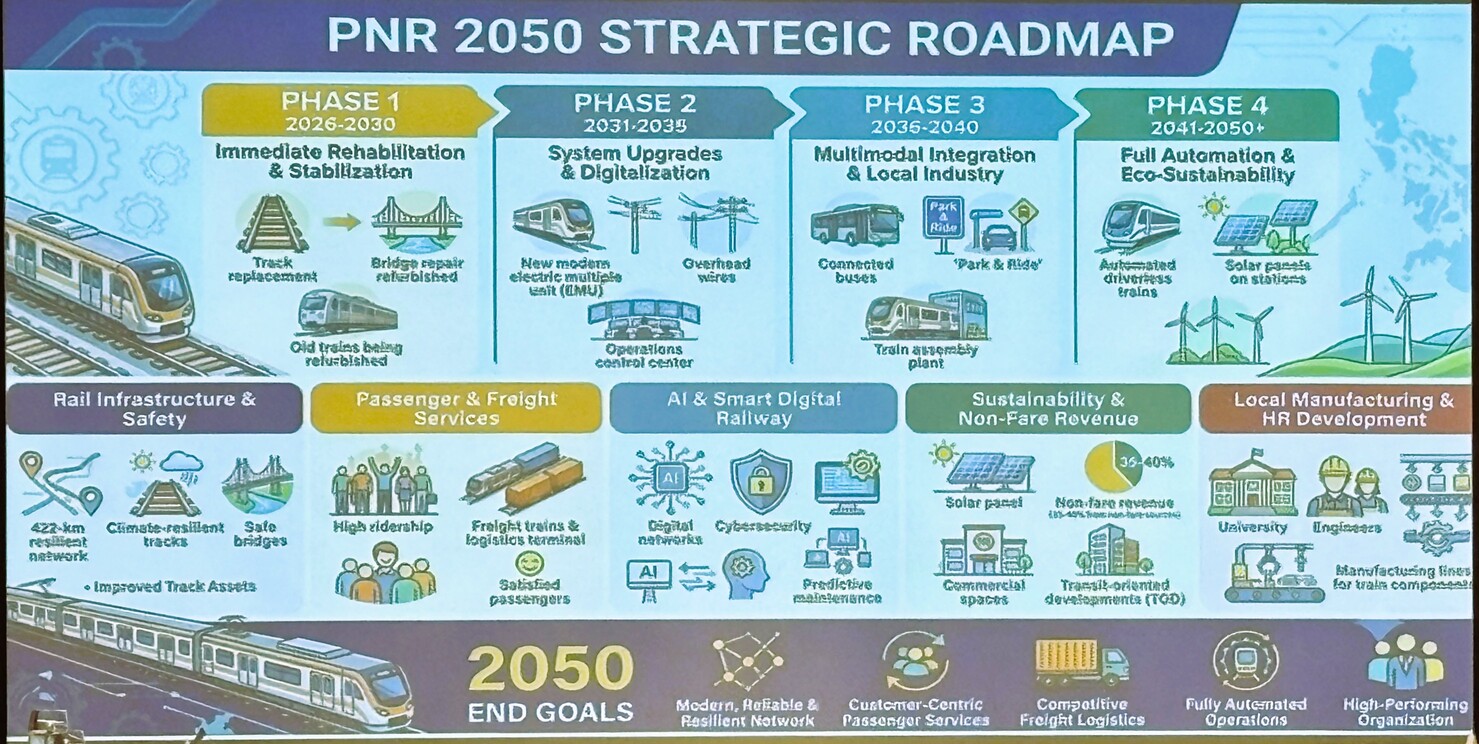
“Our dream by the end of President Marcos’ term is to complete the mainline south from Calamba all the way to Legazpi, alongside a full rehabilitation of tracks and stations,” Miranda said. “If given the opportunity to establish long-haul operations on this 423-km line, we hope—through various funding options or government support—to acquire at least two new long-haul train sets. The rolling stock we currently operate is commuter-type equipment. Even on routes extending over 147 km, we are effectively using urban rail cars similar to LRT-1 and LRT-2.”
Here’s hoping that, despite the increasing environmental challenges brought about by climate change, the next administrations will stay on track in developing, rehabilitating and expanding our railway system.
To know more about the PNR, visit its official website https://pnr.gov.ph/.